Benefits Of Elderberries

elderberries-fb


One of the things I enjoy about writing is the freedom to write not only on health and fitness, but also on a wide variety of topics as well. I talk a lot about healthy foods and what they can do for your body but today I wanna talk about a supplement.

I know, I know. A supplement. It’s not my usual style for sure but this one I think bears examining a little.

Here in the states, the flu right now is extremely serious. You can’t see the news without more awful stories coming out about  people dying, many are children.

This supplement kept coming to me in a variety of ways so I figured I needed to investigate it further. I will always encourage real, whole food sources over supplements, but I believe this supplement is most likely easier for people to get their hands on, thus receiving the benefits.

I’ve been reading about  elderberries, and how they can actually help slow the virus or cut the duration shorter.

What are elderberries?

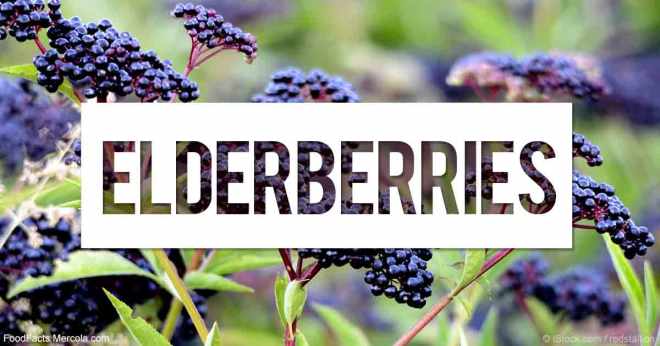
Elderberries are the fruit of the flowering plant known as Sambucus, more commonly referred to as elder or elderflower.

You will mainly find elderberries in the Northern hemisphere, particularly in Europe and North America, although some southern species are grown in Australia. The berries are black or very dark blue and have a sharp, sweet flavor that makes them highly preferred for desserts, syrups, jams, jellies, spreads, and as the base for various cocktails and drinks.

Since most of the berries in the genus Sambucus are toxic, caution is suggested and cooking the elderberries before consuming is always a wise choice. The branches, leaves, and twigs of all species contain trace elements of cyanide, which can build up in your body and eventually kill you, so be careful! ( how’s that for a fun and random fact??) if you decide to buy elderberries make sure you get them in a licensed reputable store. Don’t pick and eat wild berries as not all are safe to eat.

However, despite the implicit risks of elderberries, they are packed with beneficial nutrients, so they have been a part of  traditional medicine for hundreds of years and some health benefits have become more commonly acknowledged. We’ll look at some of those below.

  Elderberry actually has a very long history of medicinal use. Most historians typically trace it’s healing power back to Hippocrates, the ancient Greek known as the father of medicine  and who described the plant as his “medicine chest” due to the wide array of health concerns it seemed to cure.

Used for its antioxidant activity to lower cholesterol, improve vision, boost the immune system, improve heart health and for coughs, colds, flu, bacterial and viral infections and tonsillitis. Elderberry juice was used to treat a flu epidemic in Panama in 1995.

Do I have your attention now? It certainly grabbed mine when I started reading about it.

Health benefits of the elder plant

It naturally improves colds, the flu, sinus issues, nerve pain, inflammation, allergies, chronic fatigue, and constipation.

Get this… studies have shown when used within the first 48 hours of onset of symptoms, the extract has actually been found to reduce the duration of the flu with symptoms being relieved on average 4 days sooner.

During the ’95 flu epidemic the government actually employed the use of elderberry to fight the flu.

Elderberry has been the subject of numerous studies that shows it can actually decrease the duration and symptoms of the influenza virus. The high levels of antioxidants present in the extract are able to interfere with the activity of the virus itself.

Wait.. there’s more….

when it comes to antioxidants power, elderberry is higher in flavonoids than blueberries, cranberries, goji berries, and blackberries!

Elderberries are an excellent general immune system booster. Elderberry extract has been shown to be a safe, efficient and cost effective treatment for colds and flu.

With elderberries anti-inflammatory and antioxidant properties, it naturally helps clear and heal sinus issues.

Other ways it has been used and has benefits include:

It can help lower blood sugar, it’s a natural diuretic and laxative, and with it’s antioxidants and flavonoids as well as its high Vitamin A content, it makes it excellent for skin health.

The high levels of essential minerals help promote bone strength and development of new bone tissue.

Where do I get this super power food/supplement ?

As mentioned above, if you buy the berries, make sure they are from a reliable source. They offer many health benefits, including a high dose of daily fiber.

However, you can buy supplements that come in the forms of syrups, lozenges, and capsules. Dosing varies for each so it’s important you follow the directions on the package. These products can be found at local health and wellness stores or purchased online. These supplements as mentioned when taken accordingly can help with colds and flu.

Of course, if you feel like doing it, you can always make your own syrups from the berries.

Are there any side effects?

As with any herbal remedy it’s important to be aware of anything unusual you may experience. Signs of reactions could be a rash or difficulty breathing. Both should have immediate medical care. As mentioned it’s a diuretic so if you have kidney problems you may need to stay away from it.

In summary

This post is not meant as medical treatment or to suggest not using all available healthcare to keep you and your family well. It was intended to inform and educate to help alongside your health care choices. There is enough research to support elderberry helping with colds and flu that I thought it was relevant enough in this time to share with you.

Share with me. Have you tried this? If so, what has been your experience?


Time Vs. Priorities

i_dont_have_time-960x675One day. 24 hours. 1,440 minutes. 86,400 seconds.  Time. It’s something we all start off with the same amount of each day but that is where any similarities stop.
How we spend this daily valuable resource largely depends on our lives and what we choose to do with it.

There are some things that are non-negotiable in our days.

Work and travel time to and from. Sleep. Meals. Appointments to be kept are all things that automatically deduct from our daily bank account of time.

Then there could be everything from caring to our homes, raising kids, doing laundry, cooking, cleaning, doing errands the list goes on.

Of course, there are important things ( priorities) in each of our days. You know, those things that are always at the top of the to-do list to get done and HAVE to be done. We may wish we could be doing something more fun but those priorities have to take place first.

In the ways of fitness and exercise, what I hear most is… “well, I just don’t have time to exercise”… which always confuses me ’cause an hour or so is such a small part of a 24 hour day that I’m not sure what keeps someone so busy they don’t have time for themselves.

Is it guilt? Or is it just a convenient way to dismiss working out? Or is it just letting other  things have precedence over the equally important task of taking care of our bodies.

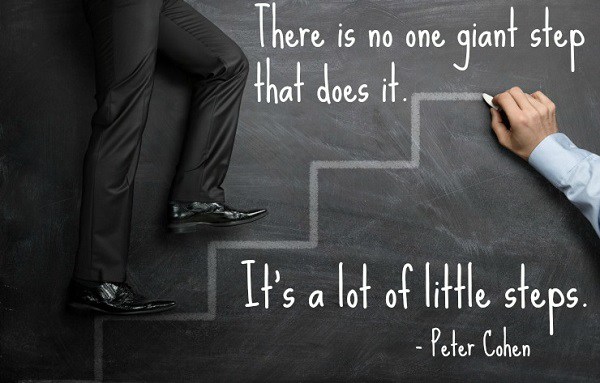
The quote I’ve used today I’ve shared before on social media.

It’s often met with crickets in regards to exercise.

Why? Because I guess at a basic level all of us intellectually know we need to do activities that support us and encourage health and wellness in our lives.

However, those activities are often hard.  Learning to eat better or say no to things isn’t always easy. Teaching ourselves to eat less or make better food choices isn’t easy. We like our old comfortable ways and want to stay in them.

Getting out of our house and outdoors to walk or ride a bike takes effort. Driving to the gym means planning and making it work in our schedules. And let’s face it, when we’re out of shape, exercise is hard and it sometimes makes us ache! It might  not be the thing you wanna sign up for initially.

You don’t get it, I don’t have time…really.

Hey, I understand! Life does get busy. There are some days for me that I just don’t see anything else fitting into it. Literally, I’m up super early for an appointment or something equally important and the rest of the day seems like I’m running and not the kind of running I’d prefer to be doing. I’ve learned to not stress over those days because I know I’ll be at it the next day.

I’ve had days where I’ve been up earlier and restructured my workout to fit the time I had in the morning to still get ready and be on time for where I needed to go.  Do you know what you can pack into 20 minutes??  A lot.

As I’ve trained myself and built new habits, it’s become something I automatically do… structure my day to accommodate my exercise.

You can do it too. Trust me.

Will you have to be intentional? Yes. Will you have to get out of your comfort zone? Absolutely. Will you have to plan and make it a part of your new schedule? Yep.

The question that begs to be asked….

Is it worth it to you?

Simple and straightforward, right?

What’s it worth to you? If it’s a priority, you’ll make it one. If not, you’ll continue to talk or think about it but never be intentional at making it happen.

How do you spend your time?

Seriously. How do you spend your free time in your day? How much time is spent on your phone playing games or surfing the web? How much time is spent laying on the sofa or sitting in the chair watching tv?

More than you realize I’m sure.

Remember we’re only talking about an hour of your day to do something positive for yourself.

What if I want to start? How?

Awesome! Making a commitment and having that desire is the most important one to take. I’ve said so many times before, scheduling your time is key to success and making it happen.

. determine what you want to do. What sounds fun or interesting that will hold your attention?

. Once you decide that, you need to determine what time of day is best for you. Are you a morning person? evening? Your job might determine when you schedule your time. But figure it out.

. With an activity, and your best time determined, now write it down or put it in whatever digital device you choose to use.

. What other steps do you need to take to make your commitment happen? will you need shoes or any type of gear? Join a gym? Schedule a personal coach? Get up a half hour earlier?  Figure it out.

. The final thing would be making sure you keep your appointment with yourself. This honestly comes down to your own determination and not quitting on your commitment. This can take a little time as your build this new habit into your life, because it will be a new habit, hopefully a positive lifelong one.

Time vs. priority. What will it be?

Have you had to learn to make exercise a priority? How did you accomplish it?

.


The Art Of Self Care

be_good_to_yourself


In todays adventures boys and girls, we’re going to branch out into something a little broader, something that encompasses more of us than “just” our bodies.

One of the buzz words out there right now is “self care”.  It’s a term  who’s meaning is most likely fairly obvious.

Let’s define self care as any activity we do deliberately in order to take care of our mental, physical, and emotional health.

In a world that is increasingly more hectic and busy with lives that sometimes have us running in different directions with all kinds of responsibilities it’s easy to put ourselves at the bottom of our to-do list of important things.

Where I’m at now in life, at the age I am, I’ve learned not only is self care perfectly ok, it’s also necessary. Self care for me involves everything from my daily exercise to reading something I enjoy or escaping to a warm bubble bath if the day has left me stretched thin as well as many other things that can soothe my body and mind and keep me a happy, healthy functioning woman.

20171116_085731
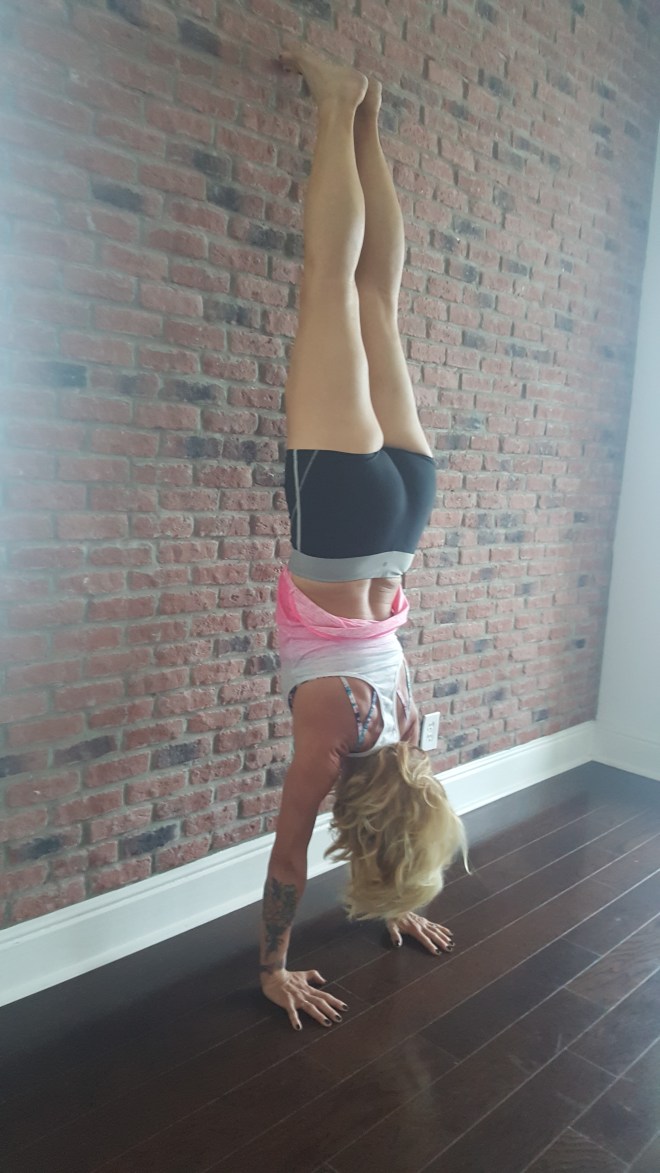
Somehow, being upside down, is one of the ways I enjoy self care 😉 #yoga


I make no excuses for it or apologize for it. Nor should you. We don’t get any extra awards in life for not taking care of ourselves.

Even with all that said, many do not, or think they aren’t important enough, to practice self care viewing it as perhaps selfish to do so.

Eh.  Perhaps some may believe it’s selfish.

I don’t really think it is.

Honestly, if you don’t take care of you, who will? And no one will take care of you better than you. ( gosh that’s a lot of “you’s” haha)

Self care keeps us not only healthy in all aspects of our life for (us) it benefits those we are involved with too ( family, friends, co-workers etc) I’m pretty sure they enjoy us when we’re at our optimal best.

So where do you start if you aren’t already practicing it? Or maybe you are to a degree but are looking for other ideas.

Let’s consider the three points mentioned: Mental, physical and emotional.

The most important thing to understand on this topic…. it isn’t a one time deal.  Much like eating properly, exercising, and anything else we do, it’s an ongoing process. Practicing small self care things each day should be something you train yourself to do. Now with that in mind let’s move on. Below you’ll find a few tips or suggestions to help you get going. I’m offering up five various ideas but you will probably be able to come up with others for yourself.

Mental self-care

Social media. Pretty much everyone is on it in some way. There can be a lot of negativity and things that aren’t positive when we log on. Some days I don’t spend much time there because honestly,  I just don’t need to view what’s on it. Weed out people who don’t offer positive vibes to you or at least mute them if their posts are troubling or pull you down. Unplug and walk away for awhile.

Do a mini-declutter. Nothing makes me feel more frustrated or overwhelmed than things seem disorganized or out of hand. Spend a few minutes on a drawer, closet or any other area that might be bothering you.

Take another route to work or change the way you go if you ride a bike or run. It’s mentally refreshing to have a different point of view.

Get out of your comfort zone. There’s nothing I’ve found more mentally engaging than getting out of that place I’m most comfortable. It will grow you.

Be selfish. Yeah there it is. The selfish word again. Do something each day for you that you enjoy that brings you pleasure or happiness. It’s really ok.

Body self-care

Exercise. Of course this doesn’t come as a surprise that this would be my first suggestion. Moving your body will not only help you physically, it helps mentally too.  Find mini times to move through out your day as well. A quick 10 minute walk or some basic stretches to loosen you up.

Learn to breathe deeply. If there’s one thing I’ve learned in yoga it’s practicing those deep breaths through all the moves. You can simply learn to take three deep, slow breaths anytime in your day. Breath in deeply, let your diaphragm expand and feel your lungs really fill with air. Slowly exhale.

Laugh. Read something funny you enjoy or watch a show that evokes laughter. Laughing is good for the soul too.

Make small changes in your diet. Maybe drink an extra glass of water, try a new vegetable or swap a sugary treat for something healthier.

Take a quick nap. A power nap can refresh and energize you for the rest of your day. Remember to keep it between 10-20 minutes

Emotional self-care

Let’s refer to emotional or care for our souls. After all we aren’t just a body wandering around and our souls need some care too.

Write out your thoughts. For me personally, writing can be the most  cathartic thing I do for myself. There are times I let my humor out and there are times I write and feel like I’m bleeding all over what I’m sharing. Write out what makes you happy, sad, angry etc

Help someone. That’s explanatory enough. There is satisfaction in helping others.

Make a small connection. Connect with the checker at the store, the barista who serves your coffee or the person in line with you. Hubby often wishes I wasn’t so skilled in this area of making connections  haha

Splurge a little. Buy yourself a treat that you might not always indulge in.

Pray or meditate. Whatever you choose to do find sometime to just be alone and reflect. To let life breathe over you. Use that time to center your thoughts and reflect on the things in your life.

There you go.  A few ideas, some suggestions, to help you with this idea of self care.  Hopefully you will come up with a few others that are specific to meeting your needs.

The most  important thing to remember is that you are valuable and self care is not a special treat or a one time thing. It’s to be practiced in a variety of ways every day to keep you healthy and well for you and those you love.

Tell me. Do you have any special self care tips or suggestions?

7 Simple Steps Towards Fitness

thereisnoonegiantstep


As we start into a new year one of the things that is, well what should I say, expected? is the plethora of weight loss ads and diets that abound. No wonder. With the holiday season behind us many are making choices to commit to some type of program or system to get rid of unwanted pounds and get their bodies into shape.

Many of the things I see, really, often gets an eye roll from me. Mainly because there are so many smoke and mirrors that aren’t really designed to be long term or sustainable for individuals using it.

However, there is one thing that will always stop me.

I love stories from real people, who were really fat ( yes I used that word) and who worked their butt’s off the old fashioned way to get rid of it and have maintained that loss.

One of the things I enjoy reading is in People magazine. They do stories each year about individuals who’ve lost a lot of weight ( think well over 100+ pounds)

No surgeries, no gimmicks, no potions or detox/cleanses or whatever.

Just old fashioned hard work and discipline.

I caught this years winners on a morning talk show today and listened as they shared their personal tips on what helped them be successful.

There were no special tricks or anything that surprised me. It was all sane, practical and livable skills that led to them losing all that weight. ( one had lost over 280lbs !! )

I’ve preached much of this before but thought I’d bring it again as succinct as possible. Losing weight and maintaining a healthy fit lifestyle just takes some time, discipline, and a commitment to making it happen.

Here’s the low down:

All interviewed cited that to be successful they had to make the intentional choice to want to be healthy. No one can make you decide to lose weight or get fit but you.  No one can do it for you. Making this decision is the first and biggest to get you on the road to a healthier lifestyle.

* You make a personal commitment then implement steps to do it.

Exercise. They all had found an activity that they liked that got them moving. As one lady said… “I knew I was lazy. I knew that being lazy was keeping me from feeling better”. She wanted to have energy to chase after her young children and play with them.  It requires some effort on our parts to “not be lazy”.

* Find something you think you can enjoy and make a commitment to doing it most days of the week.

Eating.  Needless to say their food choices had to change and the amount of foods they consumed had to change. They learned to make healthier swaps and eat less. One lady admitted to needing “structure” and had found success with a weight loss system.

* Modify your food by making better choices and reducing how much you eat. If you need “structure” there are several good programs that could help you.

Small goals.  I’ve preached this before and often. Setting small goals helps not only mentally but also gives you that sense of satisfaction of accomplishing something on your goal list. These individuals made small goals for themselves that gave them confidence to keep on going.

* Set small, attainable goals for yourself. Write them down. Make them visible so you can see them. Assess goals as you make progress.

Hard work. Losing weight isn’t always easy.  They all admitted to investing hard work to get where they were that day standing on the stage and in People magazine.

*Accept that the weight you put on won’t come off over night and it will take work to get back to where you want to be.

Must change mind set.  I think this is so important to anyone’s success. If you don’t change how you think about food, how you interact with it, own the fact you need to lose weight, learn to view health and fitness as a good thing and be willing to leave your old behaviors, habits, and patterns behind, you will not be successful. There has to be a willingness to let go of old mind patterns and develop new ones for long term success.

*Be purposeful in changing your thinking about living a healthy lifestyle.

Use Social Media.  Again, all of them cited using social media to help on their journey by sharing what they were doing, what their goals were, progress pics etc. I started using social media a few years ago sharing my running and training. It has evolved quite a bit from those days.  I quickly learned that when you share, you will get asked about what you’re doing and it gives you another level of accountability. Not only that, I learned what I did encouraged others to want to get active and try new things.

*If you don’t use social media to share your fitness journey you may consider it. You can share as little or as much as you want. You’ll be surprised at how you may encourage others and if some don’t like fitness posts, no worries, they can just keep on scrolling 😉

These are all practical steps that can lead to a permanent lifestyle change. These things are doable for success. With a little determination, commitment, and a willingness to change and let go of old behaviors you will be on your way to being healthier, stronger and more energetic for your new year.

Do you have a successful weight loss story?


Cheat Days Vs. Healthy Eating Habits

The question came at me again. Often there are similar ones that arise in conversations  in regards to health and wellness.

“Do you allow yourself a cheat day/meal?”

If you don’t know what that means, in the fitness world it’s a day set aside where you eat whatever suits your fancy. Anything you’ve been craving or put off limits from yourself. It could be a meal or an all day eating frenzy depending on how deprived you feel.

The answer is a big “no”.

No, I don’t. Never have and don’t have any intention of starting.

I’ll tell you why. October marked my 8th year on my health and wellness journey.

8 years people. I’ve lost the weight of a hefty toddler child and about 5 pant sizes. In those years I not only lost fat but have built muscle and a strong physique that allows me to enjoy all my outdoor athletic sports and gives me a good deal of energy and strength for living life.

I’ve not gained it back or played yo yo dieting games.

As I’ve gotten deeper into endurances sports I’ve come to accept that my body will go through times of being leaner when I’m doing a lot of training and a bit softer when I’m not heavy training. I can fluctuate within 5-7 pounds and I’m ok with that.

Losing weight and keeping it off for a lifetime involves small, consistent, changes that turn into new habits. It’s really the only thing that works and you have to intentionally build on it every day.

The cheat day/meal thing

if you’ve followed me for awhile you know I’m “anti” diet and diet hype nonsense. I consider my take on things practical, livable and sustainable. When I started my journey one thing I set out for myself was that nothing was off limits or to be considered “Bad or good”.

For me, it took a ton of power away from food. Mentally, if I knew I could have “whatever” then I was less likely to think about it or “wish” I could have it.

cheat meal days

It’s amazing how that works.

Allowing myself a fun meal with my family and then resuming my normal eating took away feelings of “deprivation”.

Admit it, haven’t you at some point been dieting and everyone is eating and living the good life and you feel freaking miserable, left out, disgusted with yourself and well…fat?

Me too and enough of that already.

Having a fun meal or some birthday cake at a party didn’t undo all my efforts. I had mentally taken on living healthier and I loved being in control of my choices.

If I didn’t want cake, I didn’t eat it. If I did I was smart enough to know a small piece wouldn’t end my efforts.

On the other side, saving a day to eat all the things you’ve withheld from yourself or over eating can lead to you feeling bad (physically) and bad (mentally ) for over doing it.

Binge eating only feels good in that moment.

The power of your choices

Learning to change my lifestyle I also learned there was a tremendous amount of power I had in my choices of food I made.

It was rather freeing.

Making healthier choices began to get easier and the other foods that used to have a pull on me began to have less.

But sometimes… chocolate. Or French fries.

Let’s face it when you are trying to lose weight those cravings or desires don’t come in at your scheduled cheat day do they? And what if it’s cheat day and you don’t really feel like having it?

I found allowing myself a small amount of whatever I wanted set the craving aside and took it out of my mind.  I’m still like that. If there is a strong pull, almost a physical need, I listen to my body.

I can tell you if I want something particular the need is quenched and I’m on with life again.

It is powerful making choices for yourself. Choices that involve thinking and listening to your body.

Think of how mindlessly you can eat. Eek. Tell me you’ve had those moments, that I’m not alone!

You know.. maybe you aren’t truly hungry but you are stuffing food in ’cause it’s there? or you’re in the pantry at 10 at night trolling but you know you aren’t needing food? Or when you eat past what you need to feed your appetite?

Making smaller more mindful choices on a daily basis will lead to weight loss that lasts long term and not just a few weeks until you’re eager to get back to “normal”.

Practice makes perfect…er… perfect “ish”.

Ok so no one is perfect or nails the eating thing perfectly.  With time, consistency and practice the cool thing is it will start to become second nature.  As you teach yourself to balance all food groups and eat in a healthy manner with room for those treats and celebratory moments you will find yourself automatically making those good choices and passing on things that don’t support your health and fitness goals.

You won’t need a cheat day to enjoy life or the things you love. You won’t feel deprived as you work on building new habits and skills in your life. You will feel empowered by trusting yourself and making mindful choices.

cheat days

The ABC’s Of Building A Healthy Diet

Healthy eating 2


So it’s early afternoon and I’ve finally managed to escape to my fav coffee cave and write. WHY is it so hard to get it done sometimes? Not for lack of ideas or clever creativeness but some days are just hard to make it happen.

I’m making it happen today… doing it before you decide I’ve given up on this idea of writing.

I’m glaringly aware that my computer informs me today is November 2 and there are a few thoughts that accompany that awareness.

First, wow, October sailed by. Of course I ended the month like many playing dress up for Halloween and hanging with my kids getting free candy from people who had nothing better to do than sit in their driveways all evening 😉

Then of course, with the arrival of November there are thoughts of Thanksgiving now dancing in my head. There will be plotting and planning for all of the goodies that go with that day.

BUT before Thanksgiving or anything else…. gulp.. this is the month of my duathlon. Actually 17 days out from this point. It’s hard to not see it staring me down but ready or not… it’s coming.

Ok.. more on that later….

November definitely makes me think about food. It makes me think of the seasonal tasty treats we get to enjoy and the traditions that go with them.

But today I’m thinking about food more along the lines of a healthy diet. What does that mean, exactly? And how do you build one if you don’t know much about it? Maybe you’ve been wanting to eat better but just aren’t sure what goes into a “healthier” daily diet.

Realistically, there’s no one way to eat that’s right for everyone. What works for you, might not work for me.

We’re individual and our likes and needs are varied and different.  Our likes can be based on not just our needs but cultural preferences too.  A person with health issues, like diabetes, may have to eat differently from someone who doesn’t.  So it’s rather broad to say there’s a standard healthy diet that fits everyone.

However, there are some definite building blocks that apply to all of us. With these building blocks you can shape and build your own nutritional plan that works for you.

What is a healthful diet?

it provides the proper combination of energy and nutrients to you each day. It has four characteristics.

It’s adequate, moderate, balanced, and varied.

No matter your age, health, fitness level or weight, if you keep these thoughts in mind you will be able to select foods that give you energy and provide good nutrition to you each day.

A healthy diet is adequate

An adequate diet provides enough of the energy, nutrients, fiber and crucial vitamins and minerals to maintain a persons health. A diet can be inadequate in one area or many areas of a persons daily needs.  For example, many people don’t eat enough vegetables and not consuming enough of the fiber and nutrients vegetables provide. Their intake of protein, carbs and fats may be more than adequate, often to many of these calories are consumed and the person is overweight because they eat more than exceeds their energy needs.

Under nutrition can also occur if there are several nutrients ignored for long periods of time.

Also a diet that is adequate for one person may not be adequate for another. As an athletic woman, my caloric needs on many days during the week are vastly different from a woman my age who is sedentary or lightly active. As individuals we would differ greatly in our activity level and our body fat and lean muscle mass making our requirements for fat, carbs, proteins and other nutrients very different.

A healthy diet is one of moderation

Moderation is one of the keys to a healthful diet and I believe one of the most important. Moderation refers to eating any food in moderate amounts, not to much or to little.  Eating to much or to little of any foods we cannot reach our health goals.

One example would be people who consume soft drinks. Loaded with empty, non-nutritious calories, it’s an easy way to pack on the pounds if many are consumed each day. Often I’ve seen individuals stop drinking soda and easily drop pounds.

Enjoy a variety of foods and treats, in moderation.

A healthy diet is balanced.

A balanced diet contains foods that provide the proper proportions of nutrients.  The body needs many types in varying amounts to maintain health.

A healthy diet is varied

Variety of course refers to eating many foods from all food groups on a regular basis. Often I have people say… “well, I don’t really like to eat….. ( some food)” and I remind them there are lots, and lots of other foods they can choose from that are healthy and provide good nutrients to their body.  When you eat a variety of foods it will increase the chance that you are consuming all the vitamins and minerals your body needs.   Also, when you eat a varied diet it keeps boredom from setting in which often cause many people to give up because they are tired of the same foods.  Enjoy so variety in your daily diet!

In summary…

A healthy daily diet provides adequate nutrients and it includes sweets, fats, salts, and alcohol in moderate amounts only. A healthy diet includes an appropriate balance of nutrients and a wide variety of foods.

Foods to include in your day would be:

Whole grains, a variety of veggies, fruits, dairy products and protein foods. It’s important to remember protein goes a long way in keeping you satisfied and preventing hunger as well as keeping your blood sugar stable through the day. Make sure you get adequate portions at each meal to feel full and avoid those feelings of “crashing”.

When it comes to vegetables, many people do not come close to getting enough in their daily diet. Learn to experiment with a few new ones each week. Learn different ways to cook them and be willing to explore new options for your health.

Filling your meals with whole foods (  foods as close to being real and not processed as possible) you will be able to meet the majority of your nutritional needs.

The extra stuff.

You need to limit the amount of empty calories you consume. empty calories refer to foods that provide few or no nutrients.  You should limit the number of empty calories you consume to a small amount that fits in with your daily requirements. all of which depend on your age, gender and level of activity.

Foods that contain the most empty calories are :

Cakes, cookies, pastries, doughnuts, soft drinks, fruit drinks, pizza, ice cream, hot dogs, fast foods etc. High sugar foods such as candies, desserts, soft drinks and alcoholic beverages are all referred to as empty calorie. ( I know, you’re thinking, that’s all the fun stuff!)

These foods don’t have to be banned, they just shouldn’t be what your daily diet mainly consists of.

Building a healthy and nutritious food plan might take a little work and discipline but with time you will find you can not only eat well, but have some cake too 😉

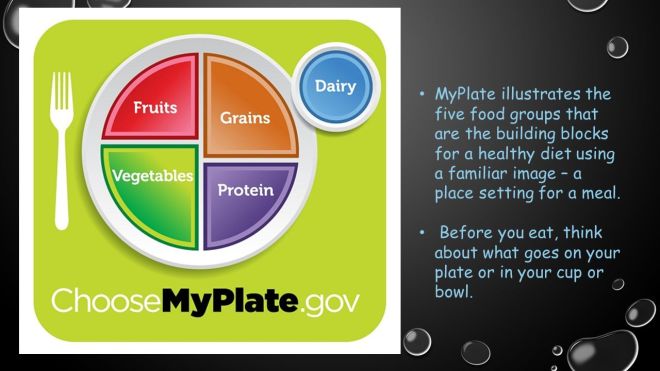
Before you eat, think about what goes on your plate or in your cup or bowl.
This is a great visual on how to structure your meals.

Iodine And Your Thyroid Health

I stumbled over the article quite by accident doing research for a post I was working on.

“Female athletes at risk for iodine deficiencies”

What? And what the heck does iodine have to do with anything?

Ok. The facts I do know or am cognitively aware of regarding iodine.

It’s a mineral. Our bodies need it. Our bodies don’t make it. I understood our thyroids need it ( but didn’t know to what extent till I started this project) I knew historically way back in the day Morton’s Salt Company started putting iodine in salt and…well… boom. No more health issues.

That’s it to the whole iodine story. Right?  Nod your head. It’s all you knew about iodine too… admit it.

Ok as a female athlete, I  obviously perked up on that story and checked it out. I mean, come on, I don’t want to be deficient in anything.

Fair to say when you meet with your doctor for your yearly check in, iodine probably doesn’t come up on the list of labs he’s doing for you.

( and for the educational record, all of our excess iodine leaves our bodies by way of urination after our bodies have scooped up what they need that day. Unless you’re also an athlete, then it up’s the game even more as we lose it through sweating as well)

After reading the article, it had some questions at the end to answer. 5 to be exact. If you answered yes to even one you had the potential to be iodine deficient.

I answered “yes” to 3 out of 5.

( do I exercise regularly, do I use less or no salt on my food, do I use sea salt instead of table salt were my “yes” answers)

I have taught myself over the years to use more cracked pepper for seasoning on my food than salt.  I also started using sea salt several years ago because I liked that it took a little amount to season my food, meaning less sodium.

Here’s what I learned on that topic… sea salt, the fancy pink salt or any other non-table salts…. none of them are iodized.

This is what put me on the road to learning more about this mineral, how it works and the role it plays in our bodies as humans, but also the role it plays for athletes. AND to figure out if I had any type of deficiency based on my answers and my athletic lifestyle.

First, some facts.

Iodine is a highly water soluble trace element that is rare in the earths crust but fairly prevalent in it’ seas. It’s also referred to as the “forgotten mineral”, it simply gets little to no acknowledgement in todays health world.  It is used by nearly every tissue in the body . This mineral is necessary for total body health and proper metabolic function. It is largely stored in the thyroid, but adrenal glands, ovaries, breasts, thymus, brain, stomach, and pancreas all require iodine, but the thyroid takes the lions share. of your daily intake in order to create the hormones  that regulate metabolism, generate body heat, and keep all your tissues functioning properly.

Thyroid hormones, thyroxine (T4) and triiodothyronine (T3), are manufactured in the thyroid gland using iodine. Iodine consumed in the diet circulates in the bloodstream and is selectively taken up by the thyroid gland where, through a series of complex biochemical reactions, it is attached to tyrosine and eventually incorporated in the thyroid hormones T4 and T3.

These thyroid hormones are stored in the thyroid gland until a chemical signal from the pituitary gland, Thyroid Stimulating Hormone (TSH), activates their release into circulation. Once in the cell, thyroid hormones help to regulate metabolism and create energy and body heat.

When the thyroid is low on iodine these hormones decrease which can lead to fatigue, cold hands and feet, weight gain, dry skin, weak nails, hair loss, muscle aches, depression, constipation, even cancer and miscarriage.

Women have a special problem being that estrogen inhibits the absorption of iodine and can put us at risk for deficiency.

Our bodies need it in relatively small amounts to function properly. However, this is a mineral we do not produce. Without proper iodine levels our thyroids cannot function properly as it feeds off this mineral. A long time ago, before you and I hit the earth, people had issues with goiters and other awful things because of a lack of iodine. Once that was figured out, those issues largely began to drop. In 1924 Mortons Salt company began iodizing table sale which virtually eliminated those health issues. Interestingly enough, hypothyroidism and hyperthyroidism are other common symptoms of deficiency. Iodine deficiency is the most common cause of hypothyroidism world wide.

However, the numbers in current terms are rather staggering….. according to research iodine deficiency has increased fourfold over the past 40 years and 74% of adults may not get adequate amounts! With doctors suggesting people reduce salt for good health the main “source” of iodine, and salt only having a certain level of bioavailability from iodine, with overall healthier lifestyles there has become a greater increase of deficiencies.

The RDA ( recommended daily allowance, here in the USA) is 150 micrograms for men and women, 220 for pregnant women and 290 for women breastfeeding however these numbers seem to be outdated as this guideline is sufficient enough to prevent goiters  and mental retardation but doesn’t address other symptoms of the thyroid or active lifestyles where it could be depleted. Sort of like the RDA for Vitamin D to prevent rickets. There is a base amount to prevent that, but humans can handle more than the RDA level.

There  are suggestions from my research that although 150 micrograms is the barebones amount people need to prevent health problems, upwards of 1100 mcg’s are tolerable for adults.

Keep in mind, as people often do, they buy into a thought that “if a little is good, a lot will be better”. Not true. Although toxicity is rare to much iodine can cause the thyroid to respond in negative ways. High levels of iodine can cause some of the same symptoms as deficiency , including goiter or thyroid gland inflammation. The thyroid is very sufficient in what it does and only needs so much to function properly.  To much can push it towards hypothyroid symptoms.

So, who’s at risk?

Back to my opening thought, my reasons for pursuing this topic. I’ve been blown away at the information on it, not only from my original intent of learning how it affects me as an athlete but the fact it’s a topic with a lot of information out there. In my research I’ve tried to steer clear of “extreme” thoughts and find common, intelligent information that consistently supports the topic.

As stated earlier, athletes are at higher risk for deficiency due to sweat losses, as well as the fact our bodies flush iodine through urination as well, A liter of sweat contains about 40 mcg’s of iodine which means we could easily lose up to that 150 mcg (baseline amount) without replenishing it through food sources, a multi vitamin, table salt, or a supplement, the chances of deficiency increase.

I had done my  own “sweat test” one day before a workout. I knew I lost a good deal of fluid but I had decided to do my own experiment for a post here on my blog.  I weighed in before and after, sans clothes, and charted my weight. In that particular workout I was a little over 3 lbs less when I finished… that was about 6 1/2 cups of fluid.  A liter contains 4.2 cups. That information alone tells me I could deplete myself considering it was almost a daily norm for me.

I learned that athletes performing at high intensity for prolonged periods of time, particularly in a humid environment, have significantly increased risk of becoming iodine deficient if they don’t pay special attention to replacing this important nutrient through diet, iodine-containing nutritional supplements, or iodized salt.

Looking at those questions on that little test, I fit a profile of an athlete who eats healthy, had already reduced salt, was using sea salt ( sparingly), exercised daily and sweated a lot. As I mentioned earlier, it came as a surprise to me that sea salt and all of it’s fancier counterparts are not iodized.

So what’s the verdict?

Without testing or overarching symptoms, you cannot diagnose you have a deficiency. An iodine loading test can be done to see how much iodine your body retains. Talking with your doctor would be the first and most important course of action if you are concerned over this.

As I obviously fall into a category that might plug me in as “potentially” deficit, I would first discuss any supplements and any testing with my doctor. On my own I will seek out natural food sources to support my iodine intake ( see some foods below).

The main thing I need to cautious over is the fact I am already hypothyroid. I  never really bring this up because well, I really don’t want to be defined by anything. I see my doctor yearly for labs, take my meds faithfully and on time every single day, and pretty much do my own thing and don’t think about it.  Athletically, I don’t feel it’s held me back in anyway.  From all I’ve learned though, taking on a supplement of any kind if you already have this condition could mess with your thyroid production. An supplement needs to be started with a small dosage to allow you time to adapt to it.

Eat healthy, it’s good for you regardless.

Below are some foods that naturally have iodine. By eating a iodine rich diet you should easily maintain a healthy level in your body. It should also be noted, if you take a multi vitamin, they have added the 150 mcgs in for you. But also as noted, that is a very bare bones minimum for a daily intake.

Iodized salt… just one gram can offer 77 micrograms of iodine.

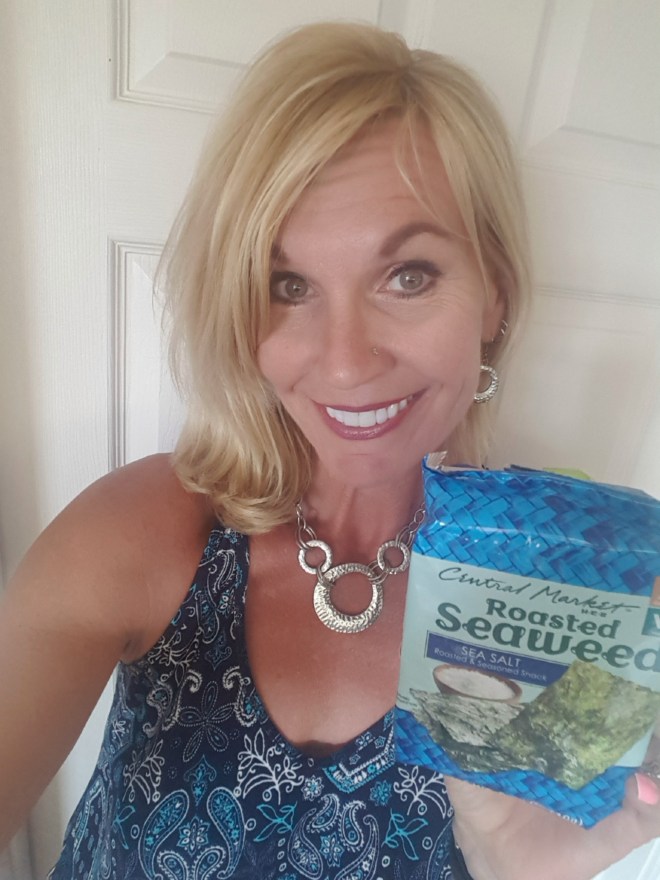
Sea veggies. Seaweed offers the highest amount of iodine on the planet (obviously) Ok… I’m going to try dried seaweed although the idea is kinda making me gag… I’ll let you know…Just a small amount a day is all it takes to easily cover you. Literally,  a quarter serving provides 4500 micrograms of iodine


20170910_210855
I wasn’t smiling after I tried it… but I can say at least I tried it, right? It tasted like I had indeed been at the ocean and accidently got seaweed in my mouth. It tasted like salt water, and as I kept chewing I thought it tasted like fish. Gah. It was like the candy in Willy Wonka that kept changing flavors. I will not be able to eat this.  Ewww.


Other foods sources that are more normal 😉 are ….

baked potatoes, milk, codfish, shrimp, turkey breast, tuna fish, boiled eggs, greek yogurt, bananas, strawberries, cranberries, canned corn, cheddar cheese, green beans, pineapple, watercress, and white bread.

Of course you can get iodine with a multi vitamin and ramping up weekly intake of fish, milk, yogurt and other food sources from the list.

And finally….

There is a lot of information on this topic and interest in the “forgotten” mineral of iodine that you can continue to read on.

You are your own best advocate in regards to your health and well being. If you have questions or concerns on iodine deficiency, starting with your doctor would be the first consideration.

Of course, intentionally eating whole foods that offer rich iodine sources are the best way to give your body what it needs to function and be healthy.


Optimal Health

Optimal health. What comes to your mind when you hear those words? A certain image? Lifestyle? A look? Perhaps it’s what happens inside of you that you can’t see… like all systems working great. Is it the “perfect” picture of health? Energetic and vibrant looking? Rosy skin? Clear bright eyes? A lack of illness or disease? Strong with the ability to do all your daily tasks with energy?

As I’ve noted before there are a lot of buzz words out there today that “health” companies use to make their product sound more appealing to potential customers, to sell you on it.  Usually the words are descriptive and designed to make you think that by taking/using their product this very thing will be given to you.

Magically. No effort.

The marketing of these products is nothing less than impressive, but the times I’m choking and rolling my eyes over some of the claims….

Keep in mind these company claims are in turn, regurgitated by the sales people who largely don’t really know what they are talking about either. It has been interesting to note the fine print showing up on many labels now that these products aren’t FDA approved or endorsed.

Ok  I digress… but my current thought was generated from the catch phrase on some products promising this ….

Optimal health

First of all, what does optimal mean ? Webster defines it as most desirable or satisfactory.

Health is defined as the condition of being well and free from disease.

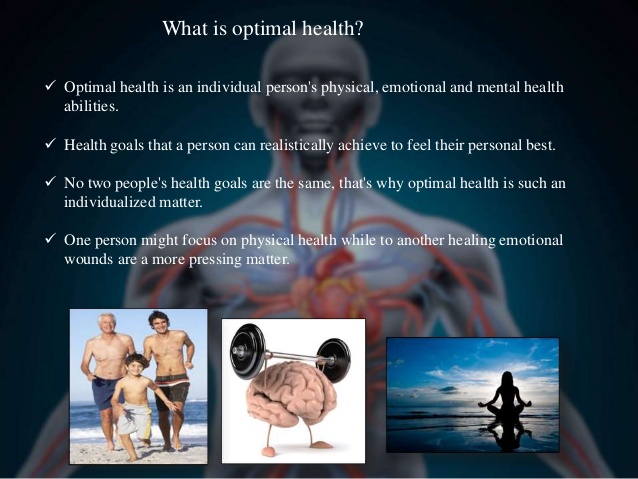
So optimal health could be defined as a desirable and satisfactory state of being well physically ( and mentally) and free from disease or illness.

Sounds good, right ?

Isn’t that something we all desire and should seek to keep? Or if we have health issues shouldn’t they ( if possible) be something we strive to improve or reverse? There are many conditions such as high blood pressure, diabetes, blood sugar issues etc that can be changed or reversed with improved health.

But here’s where I get tripped up… every. single. time.

Why am I going to take a man made product to help me achieve optimal health? Why am I going to spend my money on a product when I could buy healthy food with it?

It does amaze me that people are willing to do so many things other than what they really should be doing which is focusing on eating real, whole foods and making changes in their nutrition and exercise program.

A focus on better food quality will go a long way to achieving optimal health.  That will show up inside and out on you.

So how does one achieve optimal health?

First, it has to be something we desire and intentionally pursue. It will require consciously choosing a different lifestyle. You will have to be purposeful in your choices and decisions.

Learn to move more. Our bodies need exercise and are made to move. Active, vigorous movement allows our blood and lymphatic system to flow the way it’s designed to.  Not only that exercise benefits our mental well being as much as our physical. Exercise is good for lots of reasons but that’s not my focus today 😉

Food. Obviously, your diet should be loaded with plenty of fresh fruits and vegetables. They should be present at all your meals.  I don’t think I can stress enough the huge benefits of adequate fresh produce. To me, optimal health is achieved with good quantities of  produce.  Your daily food intake should also include whole grains, lean meats and dairy products.

It should be light on empty calorie foods that offer not a lot in the nutritional category. This includes of course, sugary drinks, alcohol, refined processed foods like cookies, crackers, chips, sweet breads, fast foods, salted foods etc.

Water. Our bodies are made up of a lot of water. Water transports waste from our bodies and hydrates us. Water is essential for our health. It helps our skin do it’s job of regulating body temperature through sweating, water is essential for circulation of nutrients through the body, it aids in digestion and creates saliva. Drink your water.

Your mind. Read. Learn to play an instrument. Take up a new hobby. Go back to school or take a class on something that interests you. Be willing to learn and grow your mind.  Find something that interests you and become an expert on it.

Your soul.  Whatever nourishes your soul, find time for it. Prayer, meditation, scripture reading, devotionals, whatever your personal preference is, find something that feeds your inner being.

Optimal health has the potential to be achieved with a balanced lifestyle that feeds the body, soul and mind. It will also vary from person to person as to what needs to be addressed to reach that goal. It requires us to be intentional in the pursuing and maintaining of it but it will be well worth our efforts.


optimal-health-presentation-3-638


Food Vs. Supplements

Sticking-to-Whole-Foods-vs-Supplements-in-Your-Everyday-Diet-765x510


Commercials. If there’s one thing they are designed for it’s to sell you on the product at hand.  To convince you that your life will be better with it. They want to make you spend your money on it.

You name it, nothing seems to be off limits anymore. One has caught my eye several times for an anti-aging skin care product… not because I put much stock in products that promote that. The cream supposedly has blackberry extracts to contribute to keeping a young look.

Of course my first thought was… why not just eat those suckers instead of using a cream that may have a touch of blackberry extract in it? They are a staple in my food consumption almost every day… I think it’s better eating them than slathering them on my eyes…

Blackberries are loaded with Vitamin C with a serving at 3.5 oz, offering 35% of the daily allowance, that serving is only 43 calories, and they are an excellent source of soluble and insoluble fiber. A serving offers 5.3 grams of fiber. This humble fruit is also loaded with all kinds of vitamins and minerals and antioxidant properties. These antioxidant compounds protect against aging, inflammation, cancer and other neurological diseases…their dark color is a sign of their high antioxidant content.

Now back to the skin care with blackberries being marketed as an anti-aging cream.

If blackberries are loaded with so many good things in such a tiny package, and are a huge anti-aging food, you should be eating them up and not just slathering a bit of cream on your skin that may have miniscule amounts in it.

You’ve heard that saying you are what you eat? Nourish your body from the inside out.

There’s a huge market right now for supplements and health products on the market. They all offer a replacement option to the actual thing… real food.

Vitamins. Minerals. Health aids. Probiotics. Protein powders. Colorful drinks. Meal “replacements”.

That’s my favorite. I don’t want a meal “replacement”.

I want real food, thank you.

This, that and the other. So many things vying for your attention and your money… mainly…. your money.

A quick stroll down the health and supplement aisle will have you believing you need these products to be healthy because well, you know, eating balanced, nutritious food just isn’t enough to keep you healthy, vital and energetic. Certainly you are lacking something…so take a supplement. Use our drink. Take this pill.

We’ve had this pushed at us for so long, we’ve started to buy into it…literally.

One of the biggest markets right now has to be with protein/supplements/shakes/add in’s etc.

Often people purchase thinking they need it, especially if they are spending time in the gym. I mean, isn’t that just a part of it? Like lifting, sweating, making gains.. you MUST be chugging down protein?

OK first… a quick look at what whey protein is

Milk is made up of two proteins, casein and whey.

Whey protein can be separated from the casein in milk or formed as a by-product of cheese making. Whey protein is considered a complete protein as it contains all 9 essential amino acids. It is low in lactose content.

This is what you see mostly in the aisles of stores.

Whey protein is used for weight loss and to help protect and build muscles.

If you use it, it should in balance too. Over doing on protein supplements can cause health issues such as stomach pains, cramps, reduced appetite, nausea, headache and fatigue.

A friend recently sent me a story of a young woman who was training and working on building her body for fitness competitions.  She evidently lived on a pretty steady diet of protein supplements/drinks/high protein diet etc.

She was found unresponsive in her home and later died. Evidently she had a rare genetic disorder that stopped her body from breaking down protein properly. This caused ammonia to build up in her blood and an accumulation of fluid in her brain.  Unfortunately, this isn’t really tested for and only found after her death.

I know you’re sitting there thinking… “well, this is a rare thing so… people don’t need to really worry about this” …

the fact is, to much of anything isn’t good for us. Our body can only use and process so much protein at a time before the rest of it’s washed out. Excess protein will not make us have more muscles or achieve a better level of fitness.

I love protein and it definitely keeps me satisfied and from feeling hungry. I know it feeds my muscles and helps them to get stronger, and even grow a little. My protein comes from food sources, although, after long endurance workouts when my appetite is not there, I will use one for recovery just to get some carbs and protein in until my appetite returns.

People are “sold” on the idea that food isn’t enough. Or if a supplement/vitamin/ drink is good, more should be better.

We are bombarded with products in the store, online, and even what our neighbor is pedaling that is supposed to help us fix all of our ills ( which we don’t even know we have till we get the product to miraculously cure them all)  There are a few out there that are promising to “cure’ more and more things. Just note, I’ve seen new fine print that says it’s not FDA approved and that its not to prevent, cure or treat diseases)

Once again I’ll say this, our bodies are made in a beautiful balanced way, needing just a certain amount of vitamins and minerals for optimal health. To much of one thing could be enough to make you sick or throw off another vitamin or mineral in your body.

And don’t be lead astray by companies trying to sell you on the idea you’re “lacking” something and need to take their product. The only way you know you’re deficient in something is usually through the doctor after having lab work done. And if you are worried about something, talk to your health care professional!

Case in point… last year my husband had labs done and was found to be deficient in Vitamin D. Yes, he has been using a supplement with his nutrition to get his levels where they need to be.

Don’t be led astray that you “need” something without any evidence for it.

So here’s the deal…

good quality, nutritious food IS enough.

It is enough to give your body daily fuel, sustain it for workouts, your daily activities, and help you build a stronger more fit body if that’s your goal.

When you cut out non-essential foods that don’t contribute to your health and fitness goals and focus on eating nutritionally balanced foods, your body will respond, especially when you add in a good healthy dose of exercise.

So many of the problems we deal with today can be improved on with better nutrition, getting the non-essential foods and drinks out, exercising more and maintaining a healthy weight.

You don’t need supplements, shakes, drinks, potions or anything else to build a healthy body. We need to be careful about extra things we put in it lest we throw off the perfect, beautiful, balance that its naturally made to operate in.

Do you or have you used supplements ? Do you feel they helped you?  Have you ever felt like you just had to go along with what was currently popular?

The Athletes Body And Food

girl veggie runner


“With all of the exercise you do, I guess you can eat whatever you want?”

This is one of  several questions I  often get asked and the answer is, no, I don’t eat whatever I want.

I’ve tried these past few years to build a different relationship with food. Specifically, food in regards to exercise.  Maybe you need to build a different relationship too or maybe you’ve hit a balance with it.

The question I’m asked of course, is merely inquiring.

If I’m investing so much physical energy I should certainly be able to eat whatever I want. This naturally means freedom to eat all perceived “off limits” foods since I will burn them off.

Of course the game changer for me if you’ve read previous posts, is the fact I’ve set nothing “off limits” so I don’t necessarily feel the need to eat forbidden foods because I’m exercising.

I know it’s there, if I want it.

Since I started on my athletic journey a few years ago, I’ve made it a point to never treat exercise like a free card to eat poorly. I guess the idea of pouring myself out, working hard, and then coming in and wolfing down a donut and chocolate milk ( although chocolate milk can make a good recovery drink 😉 ) seemed rather, pointless and negating to all I had just done. Not only that, if I was training to get strong and healthy why wouldn’t I feed my body good stuff ?

So I learned to train my thinking, essentially reshape, another aspect of my relationship with food.

Our food relationship

I wrote about that in a post recently. Our relationship with food. We all have one. For many of us we will need to continue to define this relationship in regards to our athletic activities. We cannot treat it as a free card to eat extra or eat badly.

About eating extra…..

there’s a bit of a disclaimer to that. When my training has kicked up and I have days that I’m heavily invested on a physical level I know my calories will need to increase to support what I’m doing. This is where learning about my body, listening to it, and feeding it accordingly come into play. This isn’t eating extra just because I feel like it. Learning to support my body depending on my physical output that day is very different.

Same goes for you. If you are involved in physical activities, listen to your body, know your needs and eat to sustain your body for what you do. Eat accordingly on days you invest more physical energy and be more conservative on your non-exercise days or light training days.

Don’t use food as a reward for exercise

Yeah, I’m going there. I honestly cringe when I see posts or hear someone talk about getting to eat because they exercised.

Stop it.

Food and exercise both nurture your body. You don’t have to earn your food. On the flip side, you don’t have to abuse your body ’cause you had a burger and fries for lunch and feel you have to “work it off”.  As if.

Food isn’t a reward and you aren’t a dog being thrown a treat because you worked out.

Food is fuel for your activities

When our relationship with food is in a place of understanding that it not only nurtures us, but fuels our activities we can look at it in a different way. If we want to perform well we can’t expect our bodies to operate on food that isn’t optimal. It can shift from a mentality of  ” eating what you want” to “eating food that rebuilds your body and gives you energy”.

By all means, eat enough

Long endurance training sessions can seemingly kick my appetite in over drive for not only that day, but sometimes the next as well. I’ve learned to eat healthy foods to satisfy my appetite. Again, I listen to my body and feed it as needed. I try and eat enough, but not to much.

Listen to your body. Learn to feed it what it needs after your training. Focus on healthy foods to support recovery.

I will admit after heavy endurance sessions, food is often not on my mind as those workouts tend to kill my appetite for awhile. Intellectually, I know I need to get something in me.  I’ve learned I can at least get some protein and carbs in with milk in a protein drink, I also add a banana as well, this gives me a good blend of carbs and protein for recovery.

Eat what you like that satisfies you and gives your body what it needs for repair and restoration post workout.

Keep in mind that the goal is about caring for yourself, before and after exercise. Food should be used to maintain your health and wellness, but hey, if you need some chocolate in there at some point, go for that too 😉

How have you viewed exercise and food? Do you or have you, used it as a reason to eat more or eat lesser quality food? Do you think exercise is a reason to eat “whatever” you want? Have you changed your thinking on that? How did it help you?