The ABC’s Of Building A Healthy Diet

Healthy eating 2


So it’s early afternoon and I’ve finally managed to escape to my fav coffee cave and write. WHY is it so hard to get it done sometimes? Not for lack of ideas or clever creativeness but some days are just hard to make it happen.

I’m making it happen today… doing it before you decide I’ve given up on this idea of writing.

I’m glaringly aware that my computer informs me today is November 2 and there are a few thoughts that accompany that awareness.

First, wow, October sailed by. Of course I ended the month like many playing dress up for Halloween and hanging with my kids getting free candy from people who had nothing better to do than sit in their driveways all evening 😉

Then of course, with the arrival of November there are thoughts of Thanksgiving now dancing in my head. There will be plotting and planning for all of the goodies that go with that day.

BUT before Thanksgiving or anything else…. gulp.. this is the month of my duathlon. Actually 17 days out from this point. It’s hard to not see it staring me down but ready or not… it’s coming.

Ok.. more on that later….

November definitely makes me think about food. It makes me think of the seasonal tasty treats we get to enjoy and the traditions that go with them.

But today I’m thinking about food more along the lines of a healthy diet. What does that mean, exactly? And how do you build one if you don’t know much about it? Maybe you’ve been wanting to eat better but just aren’t sure what goes into a “healthier” daily diet.

Realistically, there’s no one way to eat that’s right for everyone. What works for you, might not work for me.

We’re individual and our likes and needs are varied and different.  Our likes can be based on not just our needs but cultural preferences too.  A person with health issues, like diabetes, may have to eat differently from someone who doesn’t.  So it’s rather broad to say there’s a standard healthy diet that fits everyone.

However, there are some definite building blocks that apply to all of us. With these building blocks you can shape and build your own nutritional plan that works for you.

What is a healthful diet?

it provides the proper combination of energy and nutrients to you each day. It has four characteristics.

It’s adequate, moderate, balanced, and varied.

No matter your age, health, fitness level or weight, if you keep these thoughts in mind you will be able to select foods that give you energy and provide good nutrition to you each day.

A healthy diet is adequate

An adequate diet provides enough of the energy, nutrients, fiber and crucial vitamins and minerals to maintain a persons health. A diet can be inadequate in one area or many areas of a persons daily needs.  For example, many people don’t eat enough vegetables and not consuming enough of the fiber and nutrients vegetables provide. Their intake of protein, carbs and fats may be more than adequate, often to many of these calories are consumed and the person is overweight because they eat more than exceeds their energy needs.

Under nutrition can also occur if there are several nutrients ignored for long periods of time.

Also a diet that is adequate for one person may not be adequate for another. As an athletic woman, my caloric needs on many days during the week are vastly different from a woman my age who is sedentary or lightly active. As individuals we would differ greatly in our activity level and our body fat and lean muscle mass making our requirements for fat, carbs, proteins and other nutrients very different.

A healthy diet is one of moderation

Moderation is one of the keys to a healthful diet and I believe one of the most important. Moderation refers to eating any food in moderate amounts, not to much or to little.  Eating to much or to little of any foods we cannot reach our health goals.

One example would be people who consume soft drinks. Loaded with empty, non-nutritious calories, it’s an easy way to pack on the pounds if many are consumed each day. Often I’ve seen individuals stop drinking soda and easily drop pounds.

Enjoy a variety of foods and treats, in moderation.

A healthy diet is balanced.

A balanced diet contains foods that provide the proper proportions of nutrients.  The body needs many types in varying amounts to maintain health.

A healthy diet is varied

Variety of course refers to eating many foods from all food groups on a regular basis. Often I have people say… “well, I don’t really like to eat….. ( some food)” and I remind them there are lots, and lots of other foods they can choose from that are healthy and provide good nutrients to their body.  When you eat a variety of foods it will increase the chance that you are consuming all the vitamins and minerals your body needs.   Also, when you eat a varied diet it keeps boredom from setting in which often cause many people to give up because they are tired of the same foods.  Enjoy so variety in your daily diet!

In summary…

A healthy daily diet provides adequate nutrients and it includes sweets, fats, salts, and alcohol in moderate amounts only. A healthy diet includes an appropriate balance of nutrients and a wide variety of foods.

Foods to include in your day would be:

Whole grains, a variety of veggies, fruits, dairy products and protein foods. It’s important to remember protein goes a long way in keeping you satisfied and preventing hunger as well as keeping your blood sugar stable through the day. Make sure you get adequate portions at each meal to feel full and avoid those feelings of “crashing”.

When it comes to vegetables, many people do not come close to getting enough in their daily diet. Learn to experiment with a few new ones each week. Learn different ways to cook them and be willing to explore new options for your health.

Filling your meals with whole foods (  foods as close to being real and not processed as possible) you will be able to meet the majority of your nutritional needs.

The extra stuff.

You need to limit the amount of empty calories you consume. empty calories refer to foods that provide few or no nutrients.  You should limit the number of empty calories you consume to a small amount that fits in with your daily requirements. all of which depend on your age, gender and level of activity.

Foods that contain the most empty calories are :

Cakes, cookies, pastries, doughnuts, soft drinks, fruit drinks, pizza, ice cream, hot dogs, fast foods etc. High sugar foods such as candies, desserts, soft drinks and alcoholic beverages are all referred to as empty calorie. ( I know, you’re thinking, that’s all the fun stuff!)

These foods don’t have to be banned, they just shouldn’t be what your daily diet mainly consists of.

Building a healthy and nutritious food plan might take a little work and discipline but with time you will find you can not only eat well, but have some cake too 😉
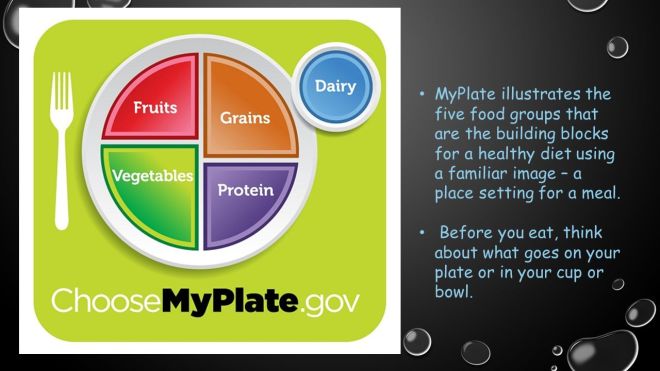
Before you eat, think about what goes on your plate or in your cup or bowl.
This is a great visual on how to structure your meals.

Pizza, Moderation And Weight Loss

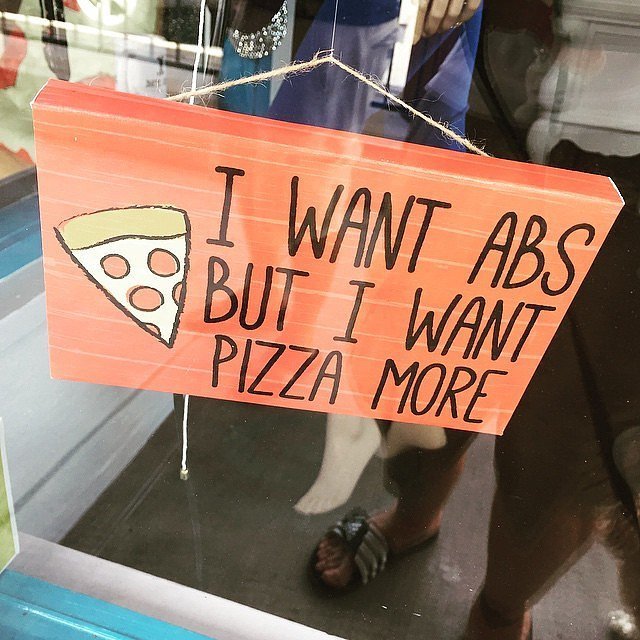
Funny-Quotes-About-Pizza-Weight-Loss
Anyone relate?


I ate pizza the other night for dinner. As you sit there downing your morning coffee you might be thinking… “and WHY are you telling me this?”  Hang with me, will you ? I’m not gonna waste your time telling you what I ate for dinner.  I mean it’s relevant for where I’m going so… hold on.

Pizza might be one of those things viewed as “off limits” or “bad” if you fall in that line of thinking for weight loss and overall lifestyle health.  I mean if you consume a lot of it, well, yeah maybe so.

I want to come to you with a perspective I preach about and believe works for anyone wanting to just live life, be healthy, fit, and not obsess constantly over what goes in their mouth.

I hated those days! Thinking of what I could eat and couldn’t eat. Thinking of when I could have food again because I was hungry and ignoring the signals my body gave me to eat.  Feeling guilty if I ate something “bad”.  Eating more than what satisfied my hunger, eating for my eyes and mouth. Worrying about how many calories I may have had or trying to keep total.

Such a miserable way to live, controlled by food in a host of ways.

So along the way, as I’ve shared before, that having an open relationship with food put me in charge of it. Basically it gave me power to make decisions based on what I wanted to do.

Food, was simply, food.  Some of those foods I knew and understood were to be enjoyed in controlled moderation to reach my goals.  Not with held which can bring on those feelings of deprivation that lead to finally eating to much of it or just throwing in the towel.

Healthy, nutritious foods were meant to make up the mainstay of my daily diet.  I learned to eat those the majority of the time.

If I had a celebration or was going out to eat, I already determined what I was allowing myself to have.

With that balance I moved forward. The weight slowly and steadily came off, I enjoyed life and didn’t obsess over how I was eating or not eating.

On a side note, this month marks 8 years since I started this process. I think this might be working 😉

So there’s a lot that goes on not just physically, but mentally as well.

Knowing and understanding that I can have any food I want let’s me make mindful decisions over what I have and when. I’ve learned to think more about what I’m eating and assess it’s importance of going in my body.  I also let go of the “last supper” mentality.

You know what that is right? It’s that attitude that says… “eat all your favorite foods up now ’cause you’re going on a diet and never, ever having them again!”

When you know you can still have your favorite cereal, snack, ice cream or a baked potato you don’t feel the need to consume it all at once.

Pizza. You’re sitting there thinking, where is this going with pizza?  For me now days, that means a piece of pizza with plenty of salad or veggies alongside of it.  I have pizza, and eating plenty of healthy, low calorie, nutrient dense veggies fills me and satisfies my hunger. Because I’ve learned to listen to my body and eat enough to satisfy it but not keep eating because it’s in front of me I’ve basically learned how to have it in small amounts.

No, I don’t feel deprived because I’m not eating more of it.  I love making mindful choices. It’s empowering to choose your food and enjoy it, whatever it is.

Getting on a path to a healthier lifestyle and way of eating involves really learning to be mindful of what you eat, and how much you eat. It means you really learn to listen to those natural God given signals in your belly and follow them.  So often we are simply “trained” to eat at certain times and follow certain social cues instead of just listening to our bodies.

If you are working to lose weight and think you must forego everything you love, rethink that.

Learn to follow a few basic rules or cues from your body

Eat when you’re hungry. Sounds crazy, I know. Just learn to do it.

Eat nutrient dense foods most of the time.

If you choose to have a food that doesn’t perhaps fall in that category, determine what you will allow yourself.  Eat slowly and learn to appreciate what it really tastes like.

Build in veggies with every meal. They are filling and beyond good for you. Not only that you won’t  be tempted to gorge on your pizza or whatever you’re having.

Satisfy your hunger but learn to stop when you feel comfortable. This takes practice, especially if you’ve been used to over eating for a long time. The point is to keep on practicing till you learn to read those signals.  Your body only needs a certain amount of food to deal with it’s hunger. Anything else turns into “head” eating.

These are things that I have slowly learned along these past years. It’s taken practice. Fail, repeat, keep going till it started to feel normal to me.

I think really tuning into your body is huge.  I think it’s also important as I’ve mentioned before, to understand why you eat beyond hunger. Our emotions are a powerful drive for over consumption of food. Learn to identify reasons that make you eat beyond hunger, this will give you a huge advantage if you’re trying to lose weight.

Life is meant to be enjoyed. It’s filled with delicious foods we enjoy. With practice and intentional, purposeful choices you can have all your favorite foods and lose weight too.

Have you learned any tips or tricks that has helped you successfully lose weight and has been sustainable for you ?

Your Schedule And Exercise

20171003_135021

Meetings. School, work, volunteer groups seems like no matter what kind of group you may be involved with at some point they have meetings you attend. Some you may be able to get out of but something like, work, you really don’t get an option.

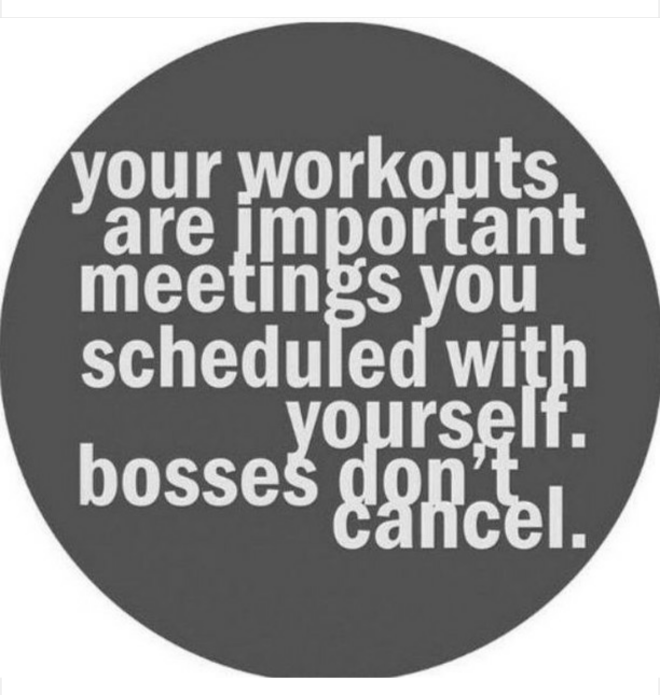
When you have a meeting with the boss you better make sure your happy little self is there ready to do what needs to be done.

A scheduled meeting with yourself to get your sweat on should be no different.

I’ve been asked how I manage to “stick with” exercise. I’ve been told that my “dedication” is to be admired. Often the person I’m talking with is wanting to know what the magic potion is that has helped me maintain my exercise regime for 8 years now.

I hate to tell you, but there isn’t any magic potion.

In the beginning it involved some whining and complaining ( to myself) but I made myself  go do it.

And those are accurate words… made myself.

No athletic clothes, no heavy sweating, no techie gear, no athletic goals dancing in my head. Just a decent pair of shoes, I’d dutifully walk off my 2 miles.

I wasn’t excited about doing it. I did it because I knew I needed to and if I wanted to live a healthy life I would move my body purposefully every single day.

I made a commitment to it. If I couldn’t do it in the morning ( my preferred time) then I’d come home in the afternoon, change shoes, and go get it done.

In time something crazy started happening….

I don’t remember exactly when the shift occurred. The shift from dutifully doing it and checking it off my list, to something I looked forward to and began to guard and schedule as anything else important in my life.

In a 24 hour span of time, my workouts sessions were my time I scheduled with myself.  I learned to view them as important as anything else I’d be doing in my day.

I learned to structure the rest of my day and appointments around my scheduled workout time, allowing for clean up and getting to my destination.

Some mornings are tight but I’ve become a wizard at transforming from sweaty, grime crusted athletic girl to someone who smells clean and looks respectable in an almost Ninja fast way.

Why? Because those meetings are important to me. They set the tone for my day. Workouts wake up my body, clear the night cobwebs and get my blood flowing. If I miss it, I honestly feel “off”.

I’ve learned a lot about myself in the process.

When you commit to something and faithfully follow through it turns into this crazy thing called… a habit. Once that habit is established it doesn’t cross your mind to make excuses to not do it.

I’ve spent a lot of time on the road and putting miles under me is a great way to learn things about myself.

I haven’t learned those things by not keeping my scheduled meetings to be there.

Over these past years I’ve seen what I’m made of when I have to dig deeper into myself for the challenge in front of me. I’ve learned I can continue to push past limits and head to new ones, and then push past those too.

In keeping those meetings with myself, fitness has taught me so much.

I’ve learned more about discipline, consistency, hard work, perseverance, sacrifice, goal setting, the strength of not just my body ( which at times I’m amazed at what it can do) but how it’s forged a fierce mental toughness in me which comes in handy for the rest of life. I’ve learned with training and determination I can do things I used to think were only for an elite group of people.

And in a cool way, I learned that I was pretty good at it.  Something else I would’ve missed out on not keeping those early morning meetings with myself.

So what suggestions do I give to people?

As mentioned above, that is one of the things I get asked mainly because I think people do find it so hard to stick with. They want ideas and help to get rolling (and hopefully ) staying with it.

They have a genuine desire but I hear them, it’s hard in the beginning! You have to fight back against all the things that come at you, especially yourself.

Excuses can be easily made to justify not getting it done. Work, family, school, other activities all clamor for our attention and we wonder if it isn’t easier to just let it go.

So here are my pointers, for what it’s worth.

~Determine what time of day is best for you. This will be a totally personal thing depending on the schedule of your life and if you function best in the morning or evening.  Find a time.

~ Start with something you enjoy doing.  You will stay with it if you actually like what you do. And why you’re doing that, be thinking of something else you can do. Having a couple activities keeps boredom from setting in.

~ Just start. Don’t wait for Monday or till after a holiday or your grandmothers birthday. Just get up and start.

~ There are days you’re gonna think you’re to tired. Do it anyway. You’ll feel invigorated I promise.

~View it as important as anything else in your day and don’t allow it to not get done. ** I will say here, sometimes life just happens, even for me. If things go beyond your control and it just doesn’t, just regroup and get at it again the next day.**

~ Zealously guard your time. In the beginning when I started exercising I kept at it because I felt like the alcoholic who, if they had a drink would fall off the wagon. Only I worried if I made an excuse one day, then it would lead to another day, and I’d find myself in the land of excuses again for dropping my exercise habit. Honestly, it scared me enough to make me stay at it. Sometimes a little fear doesn’t hurt.

~ Consistency and discipline have payoffs. Not just the side effects of helping you lose weight or how your physique may change with it, but you will build that discipline into a new habit, and new habits have this crazy way of sticking.

~ Be kind to yourself. Remember an unexpected set back or off day isn’t a reason to forget the idea. Several years ago I hurt my knee, and no, not from running. It was from learning to ride a motorcycle 😛 the doctor wanted me off running for 6 weeks. I was devastated. But I was more terrified with that much time off I’d be out of my routine and not want to go back to it. Not true. I counted the days and when I got back on the road for the first time, I literally cried. ( something I do not recommend as running with a snotty nose hinders your breathing a bit haha 😉 ) I cried to be back out. I cried that my desire hadn’t gone away. I cried for the pure freedom of doing something I had been learning to love.

That’s when I realized that exercise thing really had stuck.

Yes, there are days now I wake up and as my brain is focusing on my training for that morning I think am I gonna have all I need to do this ? Of course that’s my “foggy, I haven’t had coffee yet to remind me that, yes I do” brain speaking.

I do have all I need. I love what I can do and am thankful to be able to do it. I’m thankful I pushed on in those early days and didn’t quit.

20171003_151516
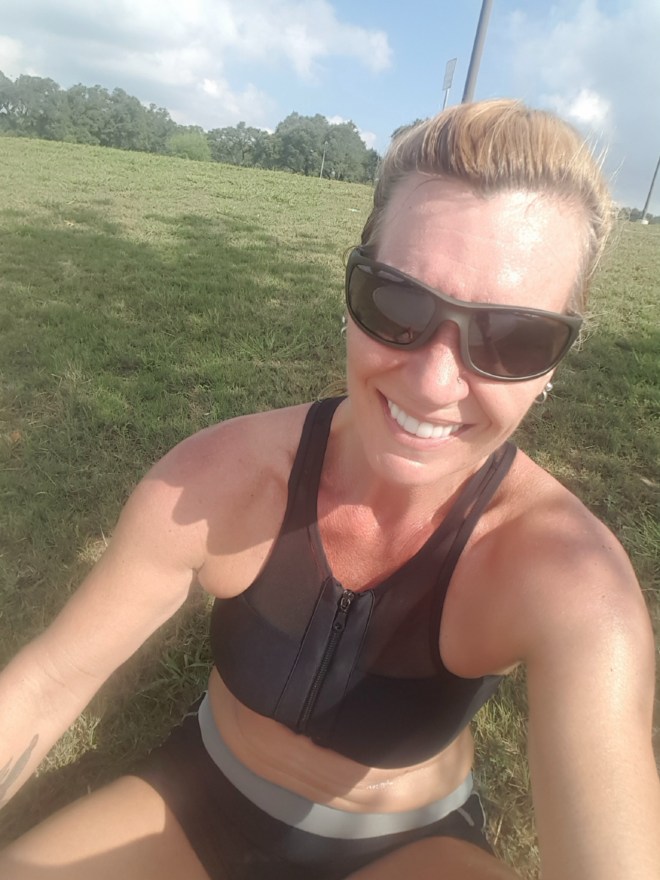
This is what happens when you stick with exercise. You’re snapping a selfie after finishing your first round through the entire duathlon course. #runbikerun


If you’re struggling to get started understand we’ve all been there. Just make a commitment to yourself and get rolling with one day at a time. Schedule your meetings with yourself and before you know it, you’ll be eager to show up for them.

Tell me have you overcome the lack of exercise in your life? How did you do it? Or is this an area you still struggle with ?

~

Health, Fitness And Not Giving Up

people give up

Hello world! Are you still out there? I know I’ve been gone for some days, but if you remember from a previous post, I had a son get married this past week and I gained a new daughter in law.

To say my four day weekend was a little busy is an understatement. However, the wedding happened, it looked beautiful, and they are now married. The most important part, right?

To say I was proud watching my oldest get married, to see his petite bride taking his arm with a smiling face and eyes only for him, yeah ok I was proud.

So now here I am, a week later trying to sit myself down and share something with you so you know I’m still alive and kicking.

So, on to todays program! As many of my posts are, they get generated through conversations with people, or sometimes a quote I see, or whatever current hype I want to address.

I recently saw a post on social media about “getting started again”. There was discouragement this person had gotten off track with their fitness goals and were attempting to get back heading the right direction again.

It really is so easy to do, to get discouraged and throw in the towel.

We forget it takes some time and perseverance to make progress!  We tend not to chart our progress when we gain weight or skip workouts ( who wants to remind themselves they aren’t working out or eating right?)

Yet when we are wanting to lose weight or get more physically fit, we get frustrated with ourselves. We want quick results and almost instant change. We look in the mirror for visible results. We put clothes on expecting them to be magically bigger.

When it doesn’t happen, we just quit.  Maybe we quit because for awhile, our old habits are just easy to fall back into. Like our fav pair of jeans or sloppy shoes.

It feels comfortable to us.

Those new changes feel uncomfortable and when we don’t get quick results it’s easy to think “why bother”?

We may look at the scale and see numbers that are seemingly so far away and getting to that goal feels overwhelming.

Maybe it’s lab results at the doctor that give a more in depth look of your health and those numbers aren’t so good.

Perhaps that walk you took off on has reminded you that, yeah, your cardio health, it’s as out of shape as the outside body you can see.

It’s not comfortable to move into a zone of “discomfort”.  And yeah, there is a certain level of discomfort that comes from moving ourselves into new habits and behaviors.

Change just won’t come unless we’re willing to accept and embrace it.

Our focus needs adjusted…

When we focus on how far we need to go to get to whatever goals we’ve set for ourselves it really hinders our progress. Not only that, it’s just not fair to yourself.

If you’re working daily to make changes ( even if you might not feel you always nail them) you aren’t being fair to yourself to consider all the work you’ve invested into the process of a lifestyle change.

I think, talking with people, this has to be one of the single most important thing to consider and remember.  I try and remind them of where they’ve come from, Whether it’s a new mentality about food, learning to listen to their bodies more about how to eat and when to eat, learning to exercise,or thinking in more positive ways about themselves. Maybe they had a better report at the doctor or they have been able to do more physically with greater ease.

A lifestyle change is a slow, daily, determined process. Don’t believe that those small changes don’t matter, they do! And in time those small things will lead to that greater weight loss you want or being able to take on a physical activity you previously thought you couldn’t.

I’m no different. True, my goals and perspectives have changed for myself since I started my health journey. I’m no longer focused on weight or trying to lose it.  But I still feel that way when I’m pushing myself to get faster on the bike, running, or lifting something heavier.

I remind myself how far I’ve come and that this is indeed, a daily journey and I need to keep my focus on how far I’ve come and not the road in front of me I’m still traveling.

Same for you. It’s much more enjoyable when you focus on what you’ve accomplished than what you still need to do.

Celebrate your victories, don’t be to harsh on yourself if a day doesn’t go as planned, and learn to enjoy your journey and all you will learn about yourself.

Are you in a place of discouragement or have you quit again? Have you done it before but now are on the right track again? What has helped you stick with it?


Food Choices Deprivation Or Empowerment

Pass Junk food


“Don’t you miss eating fun foods?” I was asked that question one day…. this person obviously didn’t know my eating habits super well or they’d know my weakness for some occasional chocolate, powdered sugar donuts, or better yet, French fries.

Years ago as I embarked on my health journey, that may have been my mentality. It would’ve have been my mentality if I had banned foods or put them off limits or treated them like I’d never, ever get to have them again.

Not making foods “good” or “bad” has helped me be successful, and stay successful on this path.  I think this theory will work for the majority of people wanting to be healthy.

Oh, in the past I can remember parties or get togethers and “abstaining” from whatever foods/desserts I thought I shouldn’t have.

Let’s be honest, that kinda stuff flat out sucks.

But here’s the weird kicker. What starts out in the beginning as something that feels out of your routine, or daily habit, can slowly be transformed into a new habit and permanent change in our lifestyle.

If you eat “junk” food and it’s your thing to go to, then your taste buds have definitely been trained to eat that way. I’d like to think all of you were raised by moms who attempted to feed you good, healthy food in the beginnings of your life.

As a free willed individual, you grew up and did your own thing. That might involve not eating what mom tried to get you to eat but instead opting for other less desirable choices.

You get it… you train yourself to eat foods that support your health and give you energy or you’re comfortable eating foods that satisfy your emotions and mouth and offer no or minimal nutritional value.

It does make me sad when people make jokes about eating foods that support good health and they don’t participate in eating that way. I’m over here thinking… “that’s your body your living in, the only one you get!”

A mental shift has to occur for anyone to be successful in weight loss and eating in a manner that supports good health.

If you view not getting to eat “junk” food as deprivation, you will not move forward. If you view eating well as punishment, you will not move forward.

We all face temptations when it comes to foods. I have my own that are best for me to stay away from.

I know what it’s like to be in the store, hungry, and all those things I know I don’t need seem to taunt me to buy them.

After all, I’m hungry, right?

But then there’s the stronger part of my mind and body that knows better…. I know how empowering it is to know it’s there and leave it. I know how empowering it is to make good food choices and how I feel after the fact.

And yes, if you are hungry in the store ( a practice I do not recommend 😉 ) there is a plethora of foods that can help you that are healthy to snack on…. really. You don’t have to be drawn in at the candy when you are checking out.

It all takes practice. And determination. And failure.

Yes. I said failure.

You aren’t going to nail this each and every time. In the beginning it will be a struggle. With repeated efforts of success and failure you will eventually have more success than not ( this is where determination comes in… and a bit of stubbornness doesn’t hurt either)

As you practice this you will develop new strength, new strength is empowering when you walk away from something. It gradually turns into something you will just automatically do.

Assess what it is. Think about if you really need it. Think about if it will support your health and fitness goals.

Make a choice.

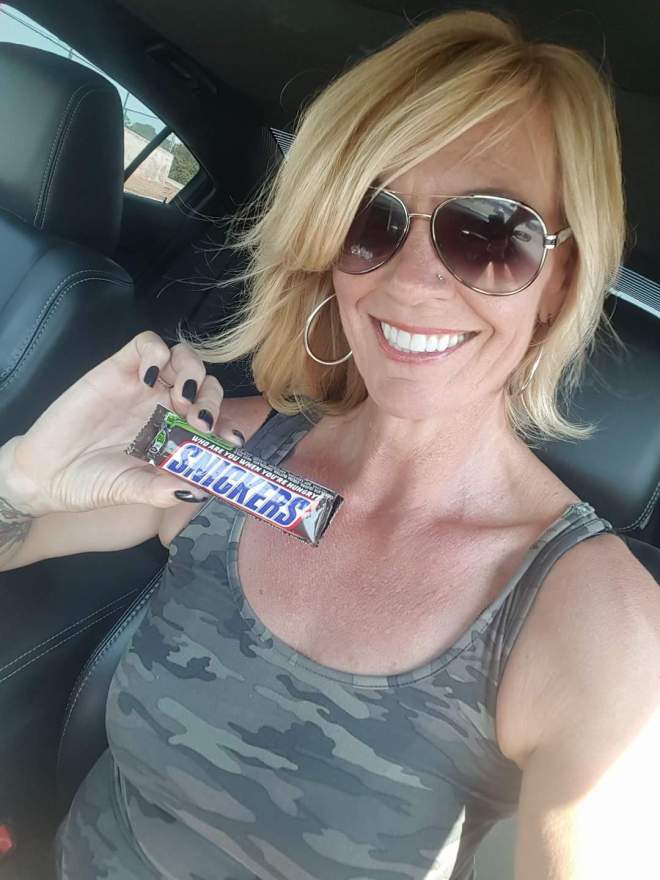
And you know what, sometimes, it’s ok to get that candy bar.

I had done a long endurance session recently and by midafternoon my body was wanting just all out pure sugar. I’ve come to know this feeling occasionally since I’ve become involved in endurance sports.

I intentionally bought a candy bar. I can’t tell you the last time I had one. It was delicious. That feeling went away after. I haven’t wanted one since.

FB_IMG_1505962322803
It was good…


No guilt.

I fully knew I could’ve gotten a “healthier” treat. I also made a mindful decision that I wanted to get that candy bar.

It is empowering when you are in mindful control of making choices regarding what goes in your mouth and how you eat.

As you learn to make eating healthier a priority, you not only feel better and are more energetic, your tastes for the lesser quality food really will diminish. In time, you will find those desired foods will have less pull and it becomes quite easy to ignore them and never have them, and yeah, you won’t feel “deprived” either. You will however, feel empowered.

A successful healthy lifestyle will involve balance. Good days and bad days. The key to success is to keep moving forward. Learn to enjoy how you feel when you make more aware choices of what you eat and when you choose a better option.

In time, it will come almost effortlessly to you.

Tell me was there or has there been a time you’ve felt deprived because you didn’t think you could have some type of food? How do you feel when you make a better choice or a more purposeful decision in what you eat?

Iodine And Your Thyroid Health

I stumbled over the article quite by accident doing research for a post I was working on.

“Female athletes at risk for iodine deficiencies”

What? And what the heck does iodine have to do with anything?

Ok. The facts I do know or am cognitively aware of regarding iodine.

It’s a mineral. Our bodies need it. Our bodies don’t make it. I understood our thyroids need it ( but didn’t know to what extent till I started this project) I knew historically way back in the day Morton’s Salt Company started putting iodine in salt and…well… boom. No more health issues.

That’s it to the whole iodine story. Right?  Nod your head. It’s all you knew about iodine too… admit it.

Ok as a female athlete, I  obviously perked up on that story and checked it out. I mean, come on, I don’t want to be deficient in anything.

Fair to say when you meet with your doctor for your yearly check in, iodine probably doesn’t come up on the list of labs he’s doing for you.

( and for the educational record, all of our excess iodine leaves our bodies by way of urination after our bodies have scooped up what they need that day. Unless you’re also an athlete, then it up’s the game even more as we lose it through sweating as well)

After reading the article, it had some questions at the end to answer. 5 to be exact. If you answered yes to even one you had the potential to be iodine deficient.

I answered “yes” to 3 out of 5.

( do I exercise regularly, do I use less or no salt on my food, do I use sea salt instead of table salt were my “yes” answers)

I have taught myself over the years to use more cracked pepper for seasoning on my food than salt.  I also started using sea salt several years ago because I liked that it took a little amount to season my food, meaning less sodium.

Here’s what I learned on that topic… sea salt, the fancy pink salt or any other non-table salts…. none of them are iodized.

This is what put me on the road to learning more about this mineral, how it works and the role it plays in our bodies as humans, but also the role it plays for athletes. AND to figure out if I had any type of deficiency based on my answers and my athletic lifestyle.

First, some facts.

Iodine is a highly water soluble trace element that is rare in the earths crust but fairly prevalent in it’ seas. It’s also referred to as the “forgotten mineral”, it simply gets little to no acknowledgement in todays health world.  It is used by nearly every tissue in the body . This mineral is necessary for total body health and proper metabolic function. It is largely stored in the thyroid, but adrenal glands, ovaries, breasts, thymus, brain, stomach, and pancreas all require iodine, but the thyroid takes the lions share. of your daily intake in order to create the hormones  that regulate metabolism, generate body heat, and keep all your tissues functioning properly.

Thyroid hormones, thyroxine (T4) and triiodothyronine (T3), are manufactured in the thyroid gland using iodine. Iodine consumed in the diet circulates in the bloodstream and is selectively taken up by the thyroid gland where, through a series of complex biochemical reactions, it is attached to tyrosine and eventually incorporated in the thyroid hormones T4 and T3.

These thyroid hormones are stored in the thyroid gland until a chemical signal from the pituitary gland, Thyroid Stimulating Hormone (TSH), activates their release into circulation. Once in the cell, thyroid hormones help to regulate metabolism and create energy and body heat.

When the thyroid is low on iodine these hormones decrease which can lead to fatigue, cold hands and feet, weight gain, dry skin, weak nails, hair loss, muscle aches, depression, constipation, even cancer and miscarriage.

Women have a special problem being that estrogen inhibits the absorption of iodine and can put us at risk for deficiency.

Our bodies need it in relatively small amounts to function properly. However, this is a mineral we do not produce. Without proper iodine levels our thyroids cannot function properly as it feeds off this mineral. A long time ago, before you and I hit the earth, people had issues with goiters and other awful things because of a lack of iodine. Once that was figured out, those issues largely began to drop. In 1924 Mortons Salt company began iodizing table sale which virtually eliminated those health issues. Interestingly enough, hypothyroidism and hyperthyroidism are other common symptoms of deficiency. Iodine deficiency is the most common cause of hypothyroidism world wide.

However, the numbers in current terms are rather staggering….. according to research iodine deficiency has increased fourfold over the past 40 years and 74% of adults may not get adequate amounts! With doctors suggesting people reduce salt for good health the main “source” of iodine, and salt only having a certain level of bioavailability from iodine, with overall healthier lifestyles there has become a greater increase of deficiencies.

The RDA ( recommended daily allowance, here in the USA) is 150 micrograms for men and women, 220 for pregnant women and 290 for women breastfeeding however these numbers seem to be outdated as this guideline is sufficient enough to prevent goiters  and mental retardation but doesn’t address other symptoms of the thyroid or active lifestyles where it could be depleted. Sort of like the RDA for Vitamin D to prevent rickets. There is a base amount to prevent that, but humans can handle more than the RDA level.

There  are suggestions from my research that although 150 micrograms is the barebones amount people need to prevent health problems, upwards of 1100 mcg’s are tolerable for adults.

Keep in mind, as people often do, they buy into a thought that “if a little is good, a lot will be better”. Not true. Although toxicity is rare to much iodine can cause the thyroid to respond in negative ways. High levels of iodine can cause some of the same symptoms as deficiency , including goiter or thyroid gland inflammation. The thyroid is very sufficient in what it does and only needs so much to function properly.  To much can push it towards hypothyroid symptoms.

So, who’s at risk?

Back to my opening thought, my reasons for pursuing this topic. I’ve been blown away at the information on it, not only from my original intent of learning how it affects me as an athlete but the fact it’s a topic with a lot of information out there. In my research I’ve tried to steer clear of “extreme” thoughts and find common, intelligent information that consistently supports the topic.

As stated earlier, athletes are at higher risk for deficiency due to sweat losses, as well as the fact our bodies flush iodine through urination as well, A liter of sweat contains about 40 mcg’s of iodine which means we could easily lose up to that 150 mcg (baseline amount) without replenishing it through food sources, a multi vitamin, table salt, or a supplement, the chances of deficiency increase.

I had done my  own “sweat test” one day before a workout. I knew I lost a good deal of fluid but I had decided to do my own experiment for a post here on my blog.  I weighed in before and after, sans clothes, and charted my weight. In that particular workout I was a little over 3 lbs less when I finished… that was about 6 1/2 cups of fluid.  A liter contains 4.2 cups. That information alone tells me I could deplete myself considering it was almost a daily norm for me.

I learned that athletes performing at high intensity for prolonged periods of time, particularly in a humid environment, have significantly increased risk of becoming iodine deficient if they don’t pay special attention to replacing this important nutrient through diet, iodine-containing nutritional supplements, or iodized salt.

Looking at those questions on that little test, I fit a profile of an athlete who eats healthy, had already reduced salt, was using sea salt ( sparingly), exercised daily and sweated a lot. As I mentioned earlier, it came as a surprise to me that sea salt and all of it’s fancier counterparts are not iodized.

So what’s the verdict?

Without testing or overarching symptoms, you cannot diagnose you have a deficiency. An iodine loading test can be done to see how much iodine your body retains. Talking with your doctor would be the first and most important course of action if you are concerned over this.

As I obviously fall into a category that might plug me in as “potentially” deficit, I would first discuss any supplements and any testing with my doctor. On my own I will seek out natural food sources to support my iodine intake ( see some foods below).

The main thing I need to cautious over is the fact I am already hypothyroid. I  never really bring this up because well, I really don’t want to be defined by anything. I see my doctor yearly for labs, take my meds faithfully and on time every single day, and pretty much do my own thing and don’t think about it.  Athletically, I don’t feel it’s held me back in anyway.  From all I’ve learned though, taking on a supplement of any kind if you already have this condition could mess with your thyroid production. An supplement needs to be started with a small dosage to allow you time to adapt to it.

Eat healthy, it’s good for you regardless.

Below are some foods that naturally have iodine. By eating a iodine rich diet you should easily maintain a healthy level in your body. It should also be noted, if you take a multi vitamin, they have added the 150 mcgs in for you. But also as noted, that is a very bare bones minimum for a daily intake.

Iodized salt… just one gram can offer 77 micrograms of iodine.

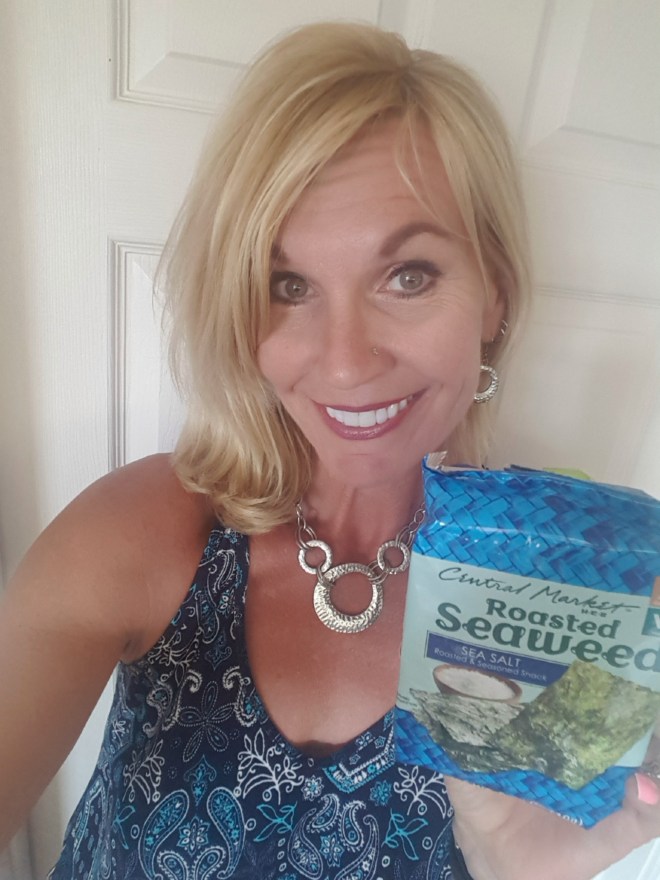
Sea veggies. Seaweed offers the highest amount of iodine on the planet (obviously) Ok… I’m going to try dried seaweed although the idea is kinda making me gag… I’ll let you know…Just a small amount a day is all it takes to easily cover you. Literally,  a quarter serving provides 4500 micrograms of iodine


20170910_210855
I wasn’t smiling after I tried it… but I can say at least I tried it, right? It tasted like I had indeed been at the ocean and accidently got seaweed in my mouth. It tasted like salt water, and as I kept chewing I thought it tasted like fish. Gah. It was like the candy in Willy Wonka that kept changing flavors. I will not be able to eat this.  Ewww.


Other foods sources that are more normal 😉 are ….

baked potatoes, milk, codfish, shrimp, turkey breast, tuna fish, boiled eggs, greek yogurt, bananas, strawberries, cranberries, canned corn, cheddar cheese, green beans, pineapple, watercress, and white bread.

Of course you can get iodine with a multi vitamin and ramping up weekly intake of fish, milk, yogurt and other food sources from the list.

And finally….

There is a lot of information on this topic and interest in the “forgotten” mineral of iodine that you can continue to read on.

You are your own best advocate in regards to your health and well being. If you have questions or concerns on iodine deficiency, starting with your doctor would be the first consideration.

Of course, intentionally eating whole foods that offer rich iodine sources are the best way to give your body what it needs to function and be healthy.


Transformation: It’s The Small Things

As I’ve meandered along these past years on what I refer to as my “journey” in fitness and nutrition,  I’ve had opportunity to talk to a lot of people who are on the same path, or trying to stay on it.

Some are successful and have found the right “blend” that works for them, the thing that is sustainable allowing them to keep after it day after day and still live their life.

Others are still struggling, battling against various issues that push them back from staying on that road to success.

I’ve seen people excitedly get started and then I’ve watched the excuses start creeping in. Excuses for eating poorly or not getting exercise. Excuses for why there isn’t a loss on the scale.  These reasons seem justifiable to them.

And I know as well as anyone how you have to battle back against excuses that creep in and try to side track you.  Because in the beginning, they always do. And it’s easy to give into them because you haven’t been grinding it out long enough to make these things a habit.

You haven’t been doing enough purposeful exercise so it’s easy to tell yourself that missing today won’t matter… until it bleeds into the next day… and the next… and then you aren’t doing it at all.

You haven’t trained yourself to turn a blind eye to the box of donuts in the office break room or pass on eating seconds because you mentally know and understand these practices won’t support your current health goals.

So many things go into our success ( or lack thereof) when it comes to our health and fitness goals.

So many things must be done and built into new habits to contribute to our success. Without building these skills, we will keep sliding back to where we’ve always been.

It takes a measure of discipline, hard work, and the ability to have days we fall and get back at it.

It’s all those small things we do consistently that lead us to where we want to be.

If there’s one thing that stands out working with people ( and those who get discouraged and give up) it’s this….

No matter what you tell someone, those small things, done daily, add up.

Unfortunately, they have thoughts that all their weight will magically go away in a week or two, forgetting they’ve been adding it on for months or years.

They start exercising and get frustrated that their body is reminding them it hasn’t done work like this in a long time, if ever. And trust me, if you don’t think you’re “out of shape” before you start an exercise program, you do when you’re body is gasping for air or aches the day after you’ve done something.

It is enough to make you want to quit before you even get started.

Raise your hand if you’ve been there. Yeah, I have too.

But when you decide you’re in it for the long haul, and you settle in to just living life, and then you just do those things that need to be done as a part of your life, changes will happen.

It’s the small things.

Yeah,  I know in the world we live in today it’s all about instant gratification, quick results, no discomfort, and easy results.

Sorry. It just doesn’t play out like that in regards to  health and fitness.

Small choices we make, small moves we make, small daily consistencies, add up.

I was thinking the other day, plowing up hill after hill doing a 5k run for the duathlon how doing it was  hard work, but work my body has adapted to and learned to respond to. My heart and breathing are strong but not in that horrible way when I was out of shape.  I also have a fast recovery heart rate now as well so when I finish, it doesn’t take long at all to be breathing normal again or have my heart rate back in a much lower zone.

Of course it wasn’t always like that. When I first started taking on hills, depending on size, I’d maybe do part way up, and then reverse my route. As I got stronger I walked strongly all the way up. As my cardio system got stronger too, I could walk them and not have my heart pounding so fiercely or be breathing as hard like a fish out of water.

Eventually, I was just all out running them. It’s such a cool feeling when my body just kicks in and does what it’s been trained to do.

The steep grade of the hill and how my legs feel pushing up it. How my body position shifts. How my breathing changes to a deep even rhythm to push on.

Small choices and activities led me to that point. Small choices also led to weight loss, getting stronger and doing more athletically.

I cant stress enough to you… if you’re on a mission to get fit, to get healthier, to lose weight. to train for an Ironman, whatever your goals are… those small choices you make each day will get you to where you’re going.

You might feel like what you do today doesn’t matter or it’s not “changing” anything. You might feel like that longer morning walk wont  result in anything or skipping on that extra treat won’t matter, but it does. Do that in a week, you’ve made progress.

And don’t forget, there is SO much going on inside you that you don’t see. Changes, growth, energy being built from what you’re doing, fat leaving, muscles growing. Your body beautifully adapting to the new changes you are putting it through.

All from those small, daily, consistent things you do.

Don’t give up. Don’t quit.

The reward is big when you don’t.

small changes


Food Vs. Supplements

Sticking-to-Whole-Foods-vs-Supplements-in-Your-Everyday-Diet-765x510


Commercials. If there’s one thing they are designed for it’s to sell you on the product at hand.  To convince you that your life will be better with it. They want to make you spend your money on it.

You name it, nothing seems to be off limits anymore. One has caught my eye several times for an anti-aging skin care product… not because I put much stock in products that promote that. The cream supposedly has blackberry extracts to contribute to keeping a young look.

Of course my first thought was… why not just eat those suckers instead of using a cream that may have a touch of blackberry extract in it? They are a staple in my food consumption almost every day… I think it’s better eating them than slathering them on my eyes…

Blackberries are loaded with Vitamin C with a serving at 3.5 oz, offering 35% of the daily allowance, that serving is only 43 calories, and they are an excellent source of soluble and insoluble fiber. A serving offers 5.3 grams of fiber. This humble fruit is also loaded with all kinds of vitamins and minerals and antioxidant properties. These antioxidant compounds protect against aging, inflammation, cancer and other neurological diseases…their dark color is a sign of their high antioxidant content.

Now back to the skin care with blackberries being marketed as an anti-aging cream.

If blackberries are loaded with so many good things in such a tiny package, and are a huge anti-aging food, you should be eating them up and not just slathering a bit of cream on your skin that may have miniscule amounts in it.

You’ve heard that saying you are what you eat? Nourish your body from the inside out.

There’s a huge market right now for supplements and health products on the market. They all offer a replacement option to the actual thing… real food.

Vitamins. Minerals. Health aids. Probiotics. Protein powders. Colorful drinks. Meal “replacements”.

That’s my favorite. I don’t want a meal “replacement”.

I want real food, thank you.

This, that and the other. So many things vying for your attention and your money… mainly…. your money.

A quick stroll down the health and supplement aisle will have you believing you need these products to be healthy because well, you know, eating balanced, nutritious food just isn’t enough to keep you healthy, vital and energetic. Certainly you are lacking something…so take a supplement. Use our drink. Take this pill.

We’ve had this pushed at us for so long, we’ve started to buy into it…literally.

One of the biggest markets right now has to be with protein/supplements/shakes/add in’s etc.

Often people purchase thinking they need it, especially if they are spending time in the gym. I mean, isn’t that just a part of it? Like lifting, sweating, making gains.. you MUST be chugging down protein?

OK first… a quick look at what whey protein is

Milk is made up of two proteins, casein and whey.

Whey protein can be separated from the casein in milk or formed as a by-product of cheese making. Whey protein is considered a complete protein as it contains all 9 essential amino acids. It is low in lactose content.

This is what you see mostly in the aisles of stores.

Whey protein is used for weight loss and to help protect and build muscles.

If you use it, it should in balance too. Over doing on protein supplements can cause health issues such as stomach pains, cramps, reduced appetite, nausea, headache and fatigue.

A friend recently sent me a story of a young woman who was training and working on building her body for fitness competitions.  She evidently lived on a pretty steady diet of protein supplements/drinks/high protein diet etc.

She was found unresponsive in her home and later died. Evidently she had a rare genetic disorder that stopped her body from breaking down protein properly. This caused ammonia to build up in her blood and an accumulation of fluid in her brain.  Unfortunately, this isn’t really tested for and only found after her death.

I know you’re sitting there thinking… “well, this is a rare thing so… people don’t need to really worry about this” …

the fact is, to much of anything isn’t good for us. Our body can only use and process so much protein at a time before the rest of it’s washed out. Excess protein will not make us have more muscles or achieve a better level of fitness.

I love protein and it definitely keeps me satisfied and from feeling hungry. I know it feeds my muscles and helps them to get stronger, and even grow a little. My protein comes from food sources, although, after long endurance workouts when my appetite is not there, I will use one for recovery just to get some carbs and protein in until my appetite returns.

People are “sold” on the idea that food isn’t enough. Or if a supplement/vitamin/ drink is good, more should be better.

We are bombarded with products in the store, online, and even what our neighbor is pedaling that is supposed to help us fix all of our ills ( which we don’t even know we have till we get the product to miraculously cure them all)  There are a few out there that are promising to “cure’ more and more things. Just note, I’ve seen new fine print that says it’s not FDA approved and that its not to prevent, cure or treat diseases)

Once again I’ll say this, our bodies are made in a beautiful balanced way, needing just a certain amount of vitamins and minerals for optimal health. To much of one thing could be enough to make you sick or throw off another vitamin or mineral in your body.

And don’t be lead astray by companies trying to sell you on the idea you’re “lacking” something and need to take their product. The only way you know you’re deficient in something is usually through the doctor after having lab work done. And if you are worried about something, talk to your health care professional!

Case in point… last year my husband had labs done and was found to be deficient in Vitamin D. Yes, he has been using a supplement with his nutrition to get his levels where they need to be.

Don’t be led astray that you “need” something without any evidence for it.

So here’s the deal…

good quality, nutritious food IS enough.

It is enough to give your body daily fuel, sustain it for workouts, your daily activities, and help you build a stronger more fit body if that’s your goal.

When you cut out non-essential foods that don’t contribute to your health and fitness goals and focus on eating nutritionally balanced foods, your body will respond, especially when you add in a good healthy dose of exercise.

So many of the problems we deal with today can be improved on with better nutrition, getting the non-essential foods and drinks out, exercising more and maintaining a healthy weight.

You don’t need supplements, shakes, drinks, potions or anything else to build a healthy body. We need to be careful about extra things we put in it lest we throw off the perfect, beautiful, balance that its naturally made to operate in.

Do you or have you used supplements ? Do you feel they helped you?  Have you ever felt like you just had to go along with what was currently popular?

Understanding Emotional Eating

It’s 9:30 at night and you are for some reason, in the pantry studying the options, deciding what your poison will be. Cookies? Chips? Maybe the freezer is your thing… there are several varieties  of ice cream begging for attention.

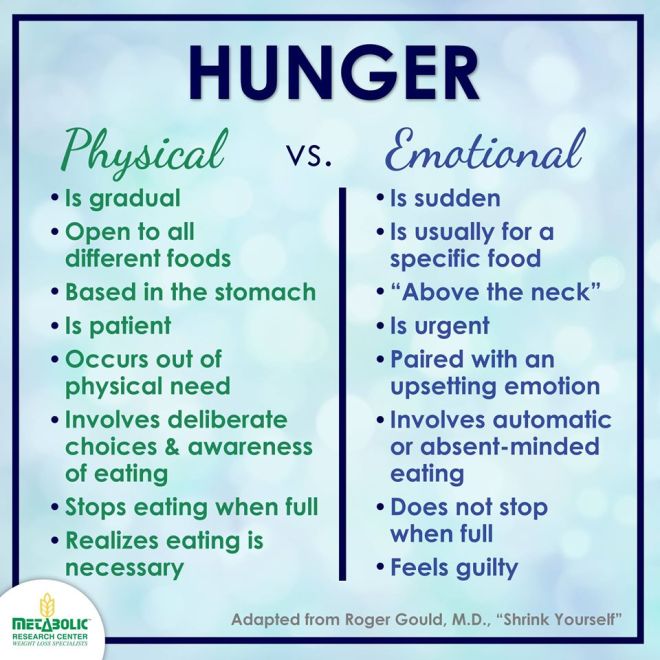
You aren’t really hungry. Your stomach is quiet and you don’t have the physical signs of actually needing to eat food.

But there’s this driving urge in you….

And here you are… stalking the goods… out of what? Boredom? Loneliness? Anger? Hurt? Happy the day is over? Frustration? Hard day at work? Worry? Maybe you don’t even know.

Whatever the reason, it’s emotionally driven. You may be aware of it, or you may feel powerless against it. It may come on like a compelling urge and you act purely instinctively on it without pausing to think of what you are doing.

Many times, it may be completely mindless. Eating as you feed your mind food for your emotional needs.

Emotional eating is only a problem when it becomes a persons central response to  regulating their mood. It is a coping strategy.

What is emotional eating, exactly?

Stress eating. using food to make yourself feel better, eating to satisfy emotional needs rather than physical hunger.

Occasional eating for reasons other than hunger isn’t bad. Some degrees of emotional eating is normal. Food is typically the focus on holidays, celebrations, life events, funerals, weddings, etc.

However, if it is your “go to” , your primary coping mechanism, then there’s a problem.

You are in an unhealthy cycle where the real problem isn’t being addressed.

~ Emotional hunger can’t be filled with food.

~ Feels good in the moment but then you are left with guilt of eating whatever is bugging you.

QUOTE-FOOD-DISTRACT-DO-IT1

Identifying… are you an emotional eater?

Do you eat more when stressed?

Do you eat when you aren’t hungry or are full?

Do you eat to feel better? ( calm or soothe yourself)

Do you reward with food?

Do you regularly eat till you are stuffed?

Does food make you feel safe or like it’s a friend?

Do you feel powerless or out of control with it ?

Emotional eating craves specific comfort/ junk food or sugary snacks that provide an instant rush.

Mindless eating is not satisfied when full. Emotional hunger is not in the stomach. This also leads to negative feelings ( guilt, shame, regret) eating what you feel you shouldn’t have.

Food self soothes. Emotional eating is an attempt to manage moods with food.

Identifying triggers

it’s helpful to assess yourself and understand what can set you off. Situations, places, feelings, etc can cause you to reach for food.

Triggers wont always be negative but can be triggered by positive emotions too ( a reward for a goal, birthdays)

I mean really, who is ever actually hungry for birthday cake or some Christmas cookies? We eat it because it’s enjoyable and we are celebrating.

Common causes of emotional eating

Stress, stuffing emotions, boredom, loneliness, feelings of emptiness, social influences or even ingrained childhood habits can lead to overeating.  It’s important to find other ways to feed your feelings, alternate behaviors that have nothing to do with food.

If you don’t know how to manage your emotions in a way that doesn’t revolve around food you won’t be able to control your eating habits for long. Diets often fail because they offer logical nutrition advice – IF- you have conscious control over your eating habits.

They don’t/won’t work when emotions take over demanding a swift payoff of comfort foods. To stop emotionally eating you must learn new ways to fulfill yourself emotionally.

Understanding the cycle and triggers is a huge first step. You need to learn alternates to turn to and not food.

How to help yourself

Pause. Think. Reflect = different decision.

Can you wait?

While you wait…check in with how your feeling… what’s your emotional status?

Are you truly hungry? as in experiencing natural signals of hunger? Or is it your mind/emotions talking?

You’ve attempted resistance in the past with the belief that your willpower isn’t enough.

The truth is you have more power over your cravings than you believe.

Really.

By checking in with yourself, pausing, examining what it is you’re feeling you are more likely to make a different choice than just eating whatever you have in mind.

Learn to accept good and bad feelings. The root of emotional eating is feeling powerless over your emotions. You can’t deal with them so you avoid feelings with food.

Become a more mindful eater.

Mindful eating is a practice that develops your awareness of eating habits and your food.

Think about the foods you buy. Do you buy healthy foods? Do you buy trigger foods that will contribute to times of emotional eating? Think of what foods will nourish you.

Come to the table hungry. Not ravenous, but with your body giving you it’s natural signals it needs to eat.

Start with small amounts. I’m always amazed, really, at the small amount of food it takes to feed myself and deal with my hunger.

Learn to really appreciate your food. I make jokes to hubby about how amazing food tastes when I’m seriously hungry ( like after long workouts and I’m finally ready for food) not only does it taste awesome, it feels good going in ’cause I am really hungry. I have an appreciation for food with true hunger.

How it tastes and the satisfaction are so different than eating when you aren’t really hungry.

Bring all your senses with you to the table. Learn to smell, savor, and visually appreciate what you are eating.

Take small bites, chew well, and learn to eat slowly.  Doing so will let you really taste and enjoy your meal while allowing your stomach to register that it has had enough food.

Becoming a mindful eater also means staying connected with your feelings and how it impacts your choices in your day with food. It’s practice but with practice you can become more mindful of reasons why you eat when you aren’t hungry or feel like you’re emotions are driving you.

Some reflective thoughts….

I’ve shared several times in blogs my own awareness of coming out of a family of emotional eaters. I’ve talked about learning about myself and being mindful of it in my own life. Understanding that definitely helped me on my weight loss journey.

Sometimes I make very mindful choices that I want something, knowing full well, I don’t need it. Hubby wandered into the kitchen one night to find me perched on the counter top with a bag of chips, munching away.

I told him “I am fully cognizant I’m emotionally eating these right now” and the fact was, there had been some thing or another that had made me feel angst and I just wanted those stupid chips.

The thing about knowing and understanding it’s what I was doing? I ate some, reined myself in, and put them away.

I was mindful of my actions.

You might need time to get there. Maybe you’re at a point where somehow the bag disappears on you. Or maybe more cookies than you intended. Or a whole lotta ice cream vanishes. Or whatever your brand of poison is.

It might require work and effort on your part. It might be times of failure and times of success. The more you mentally engage with it, the closer you will get to not feeding your emotions.

This is such a big topic, you might find more on it in the future here. I think many struggle with it and it prevents the success they long for with weight loss. Gaining insight and understanding can help lead to success.

Do you have thoughts on this?

Have you struggled with emotional eating? Did you find ways to change it?  Do you struggle now? What has made you aware of it?

EmotionalEatingChart


The Dangerous Game Of Off Limits Foods

received_10213413020740913 (1)

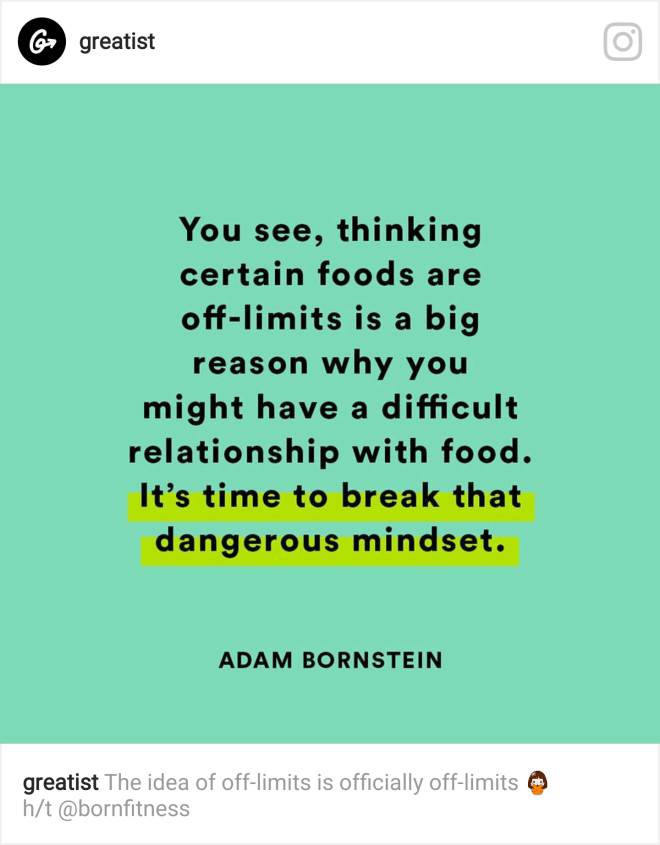
Just let the quote I have posted breathe over you for a few minutes. Think about it.  Can you relate on some level whether it’s now or at some point on your health journey ? It resonated deeply with me the first time I read it.

It’s a thought that permeates our society right now. An out of control, crazy way of thinking.

And it’s designed to have failure as the ultimate outcome.

“Good foods/bad foods”, ” Eliminate food groups”, “Sugar is like cocaine”, “Carbs are bad”. “Fat is bad”…..

Blah. Blah. Blah.

Every single one of those thoughts can potentially set you up for failure when it comes to eating and nourishing your body.  Setting up negative thoughts is exactly why so many people struggle with their relationship with food.

You may not like to think of it that way, but you do. We all do.

Those relationships can look really different for all of us.

Food can represent a power struggle in both directions. To one extreme it can result in eating disorders like anorexia… withholding food.

It can go the other direction which is bulimia, a complete out of control power with food.

It can also be the act of just over eating. Eating more than our bodies need for nourishment and health which leads to being overweight. Eating to feed a deeper need than physical hunger…  like emotional eating.

Our relationship with food can become rigid where everything is monitored that is taken in. Food becomes a task master to keep after and keep under a tight rein. It’s thought of constantly.

Or we may be fortunate to have developed a healthy relationship with it naturally on our own, or through our own health journey and arriving there through life experiences.

When we begin to set foods apart, good or bad,  putting them in an off limits category, and tell ourselves we can’t have them or that they are bad we start to give food a lot more power than it needs to have.

A part of learning and building new habits is to keep food in a “neutral zone”.

Food is food.

Don’t demonize it or put yourself on some restrictive way of living so all you do is think of those “forbidden” foods.

Do you see the danger of giving certain foods so much power in your life ? It’s designed to keep you from being successful.

Why?

You restrict foods, take them away, label them as bad, or you decide food group “x” isn’t something you are going to eat anymore ’cause that’s the current hyped up trend going on ( not that you have any health issues dictating it) but you’re participating in it.

You really love those foods and will miss them … where do you think your mind will be ?

Exactly.

Smack on the things you’ve set up as “off limits” which will only continue to warp your relationship with food and it’s a dangerous process.

I guess I fall in the camp of figuring out my relationship with food on my journey of health and fitness.

I shared in another blog that I grew up in a family of emotional eaters. I was one too and figured it out as I grew in my understanding of my relationship with food. I’d say I largely have it under control, although there are moments I am aware I’m eating for a reason other than hunger.

I tried many “diets” through my life. Ultimately, all I could wait for was for it to be over and get back to “normal”. ( I see you nodding your head. You know what I mean). Good times.

I’d say THE single biggest factor in my success ( I’m 8 years out now so I think I can address this)

I put nothing “off limits”.  Nothing.

You know what that did? It took all power out of anything that may have been forbidden.

I know what you’re thinking…. “Oh, then you probably just went off the wagon all the time”

No. I didn’t. I’m a big girl and certainly have the ability to control what I stuff in my mouth. But it did keep me from over thinking on food.

If my family went to get a burger ( which was an occasional treat) I wanted to enjoy it with them and not sit there forlornly eating a tub of pale iceberg lettuce with two tomatoes in it.

You might think that would send me off the deep end. Like… throw in the towel. Not at all. I continued my commitment to what I was doing. My daily focus on food was to eat well, eat moderate, and allow some treats to be factored in on my weight loss journey.

Now hear me. Although I don’t like to label foods, we can agree that there are some that aren’t the best for our health goals or the best to eat on a frequent basis. I kept that in mind too.

Fried/processed foods, drive thru meals, sugar, alcohol, simple carbs like cookies, cake, chips, candy, sodas, sugar drinks etc. can be tasty treats but must be handled with moderation.

I wasn’t to crazy at all about the idea of giving up chocolate to lose weight! I learned that a small amount, savored, often was enough to satisfy me. I didn’t need to just keep consuming it because it was there.

I don’t think I’m alone in this. The most successful people I know have done it with a non-restrictive balance in their lives.

Do I have trigger foods?

You bet I do. I know that it’s just not a smart move to bring home any type of kettle potato chip unless I’ve got people there eating them with me. 😛

It’s been a learning process.

Learning to trust myself with food. I don’t have to eat it because it’s there or have a “last supper” mentality and consume it all because I may never get it again.

Learning to listen to my body and it’s natural signals.

Learning to not be horribly restrictive to prevent the caving in and eating whatever because I felt deprived.

Learning to make better choices that supported my overall health and fitness goals.

I have learned….

to know my body and what makes me feel good and energetic.

I feel better eating lots of veggies and fruit. I have learned some foods just make me feel more sluggish or bloated and I’d rather pass on them. Lean meats, veggies, and good whole grain carbs keep me energetic and decently lean.

Those foods that used to have a pull on me don’t so much anymore. Healthy eating is natural and comfortable to me now.

I’ve learned to be patient with myself. Some days just might not be that great and it’s ok if I get up and keep going. The “not so great days” though have become less and less as this has become my lifestyle and I’ve built permanent habits.

Forward, slow, steady progress is the best kind of progress. It lasts.

I’ve learned a lot about nutrition. I eat adequate, good food to nourish my body three times a day and I don’t really think about food much anymore… except when my tummy is yelling at me 😉

I’ve learned life is a beautiful journey and it will have birthdays, and holidays and celebrations and food is a big part of those things. Finding balance and being able to enjoy those times is one of the best things about not having “off limits” foods. I have learned I can have my treats and it doesn’t undo all of my hard work. The best part? Not having that self-imposed “guilt” that used to come with it.

I don’t know where you are on your journey of health and fitness. If you struggle with food and are trying to understand your relationship with it, I hope that you at least begin to not cast foods into off limits groups. I hope you give yourself the freedom to eat well, to learn about yourself in the journey, and that you will find perfect balance in your personal relationship with food.

In summary

Know your relationship with food.

Don’t categorize food. Food, is simply, food.

Learn to know your body and listen to it.

Nourish it with healthy foods the majority of time and allow occasional treats.

Trust yourself.

Don’t practice a restrictive lifestyle.

Walk the road you are on. Slow and steady will last a lifetime.

Don’t quit.

Where are you on your journey? Do you feel like you have balance in your relationship with food? Have you set foods up as good or bad and then changed your thinking ? How did that help you?